Debt Consolidation vs. Bankruptcy: Which Option Is Right for You?


Key takeaways
- Debt consolidation combines multiple debts into a single payment, while bankruptcy is a legal process that may eliminate or restructure debt.
- Bankruptcy typically has a more severe and longer-lasting credit impact.
- Debt consolidation often works best for those with between $10,000 and $80,000 in unsecured debt and who have a steady income.
- Bankruptcy may be necessary when debt exceeds your ability to repay.
- The right option depends on income stability, total debt, and financial goals.
Debt consolidation combines multiple debts into a single, lower-interest payment, while bankruptcy is a legal process that can eliminate or restructure debt that can no longer be repaid. Each option carries different costs, credit consequences, and eligibility requirements.
If you’re here, there’s a good chance you're not just looking for a casual comparison.
First of all, you’re not alone. Millions of Americans are dealing with significant credit card balances, medical bills, and personal loans that get harder to keep up with each month. If you’ve found yourself looking into bankruptcy, or if someone has suggested it, it’s usually because the minimum payments aren’t making much progress, and the pressure is building.
What many people don’t realize is that bankruptcy is seldom the first option that experts recommend.
Understanding how each option works, what they cost, and how they affect your credit and financial future can help you decide which path may best fit your situation.
What Is Debt Consolidation?
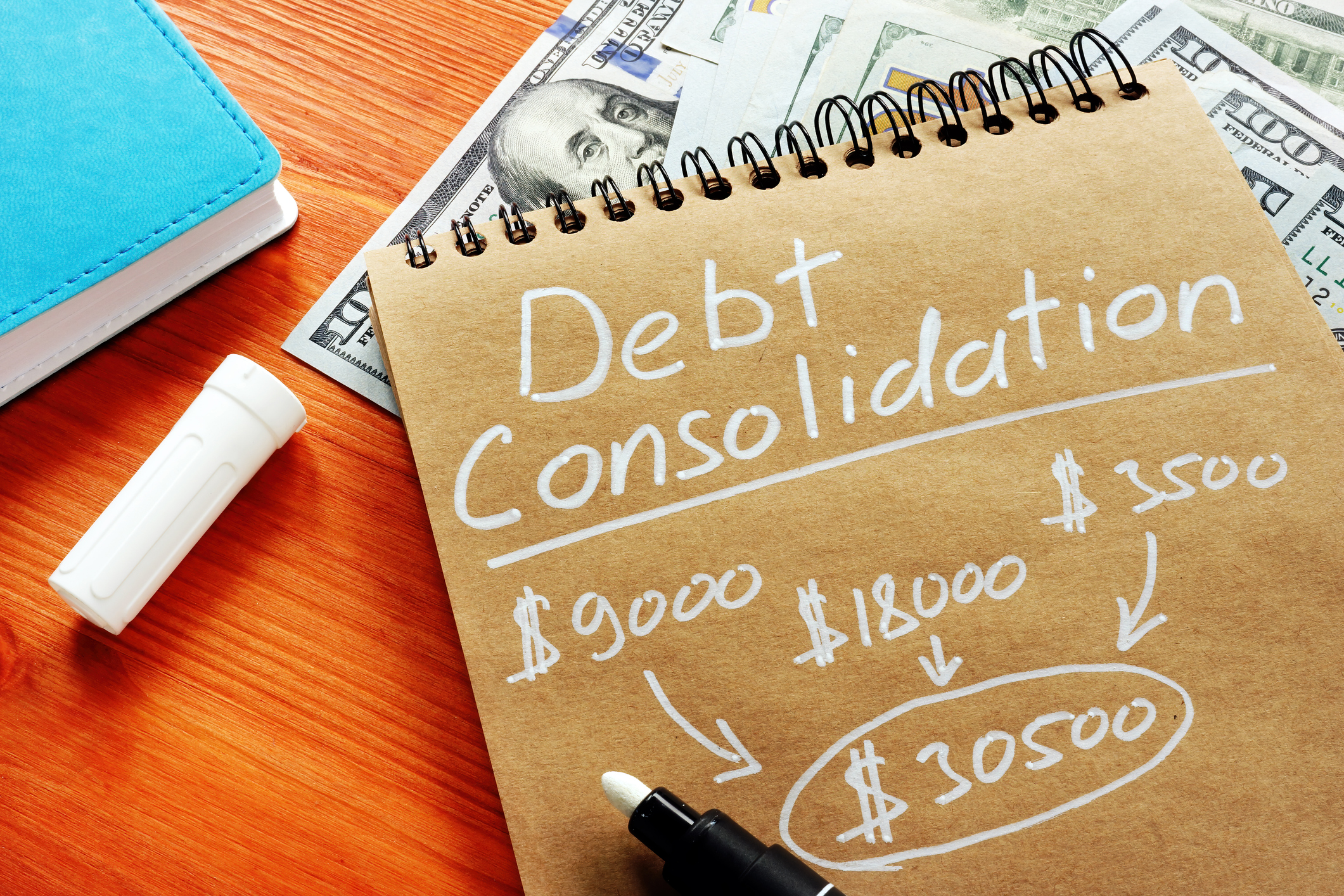
Debt consolidation combines multiple debts into a single payment, usually with the goal of simplifying repayment and lowering interest costs.
Most often, people use debt consolidation when they wish to combine multiple unsecured debts, such as:
Credit cards
Personal loans
Medical bills
Typical debt consolidation amounts range from $10,000 to $80,000. However, the amount you need is personal and can vary by lender, your financial situation, and credit score details.
Common debt consolidation methods include:
Personal loans: Fixed-rate loans used to pay off existing balances. This is arguably the most common method in mind when people discuss debt consolidation.
Balance transfer credit cards: Introductory low or 0% APR offers can provide a temporary pause for high-interest card debt, in which you pay down the balance as quickly as necessary to avoid the interest becoming due.
Debt consolidation programs: Structured repayment programs through credit counseling agencies
Home equity loans or HELOCs: Lower-rate options for homeowners. These are secured loans often used to pay down unsecured debt at a lower interest rate or longer payback period.
In most cases, consolidation does not reduce your total balance. Instead, it changes how you repay it.
What Is Bankruptcy?
Bankruptcy is a legal process that allows individuals who can't meet their debt obligations to either eliminate debts that qualify or reorganize them into a structured repayment plan under court supervision.
The two most common types are:
Chapter 7:
Discharges many unsecured debts.
May require selling non-exempt assets.
Often completed in 3 to 6 months.
Requires passing a Means Test, which compares your income to the median income in your state.
Stays on your credit report for up to 10 years.
Chapter 13:
Creates a 3 to 5 year repayment plan, depending on case specifics, and based on your disposable income.
Allows you to keep certain assets.
Remains on your credit report for 7 years.
Bankruptcy also triggers an automatic stay, which can temporarily stop collection actions, lawsuits, and wage garnishments.
How Are Debt Consolidation and Bankruptcy Different?
Debt consolidation is a financial strategy for repayment, while bankruptcy is a legal solution for financial distress.
Debt Consolidation vs. Bankruptcy At-a-Glance
Debt Consolidation | Bankruptcy | |
Primary Purpose | Simplify and repay debt | Eliminate or restructure debt |
Costs and Fees | Origination or program fees typically 1% to 10% of the loan amount; balance transfers often include 3% to 5% fees | Filing fees (~$300 to $350) plus attorney fees, typically $1,500 to $6,000+, depending on case |
Process Type | Loan, program, or interest reduction offer | Legal court process |
Credit Impact | Mild to moderate | Severe |
Privacy | Private | Public record |
Asset Risk | None | Possible (Chapter 7) |
Timeline | 2 to 5 years | Months to 5 years |
Depending on the amount you owe, debt consolidation may cost more over time due to interest and the fact that you're paying your debts over time. However, it avoids, or at least minimizes, the legal consequences and the more severe credit impacts of bankruptcy. Bankruptcy can reduce total repayment costs but comes with significant credit trade-offs.
How Does Each Option Affect Your Credit?
Credit impact is one of the most important differences between these options.
With debt consolidation, your credit score may begin improving as balances decrease and on-time payments build history. Bankruptcy can reset your debt, but rebuilding credit takes longer and may involve higher borrowing costs initially.
Credit Impact Comparison
Debt Consolidation | Bankruptcy | |
Initial Credit Score Impact | ~5 to 20 point drop from inquiry or new account | Often 100 to 200+ point drop |
Recovery Time | 12 to 24 months with consistent payments | 3 to 7+ years for meaningful recovery |
Credit Reporting Duration | Based on account history. Initial hard inquiry will appear on report for 2 years. | 7 years (Ch. 13), 10 years (Ch. 7) |
Impact on Future Borrowing | Improves with positive payment history | Limited access early - improves gradually |
Who Qualifies for Debt Consolidation?
Debt consolidation requires meeting certain financial criteria. However, it's essential to note that qualifying varies widely between lenders.
In most, but not all, cases, qualifying requires that you have:
Steady, reliable income
Fair to good credit, except in some cases
The ability to make consistent monthly payments
Mostly unsecured debt
Approval always depends on your credit profile, income, and overall financial stability.
When Does Bankruptcy Become an Option?
Most people should view bankruptcy as a last resort, and when debt repayment on a large scale is no longer realistic.
It may be worth exploring if:
Your total debt exceeds your ability to repay
You are significantly behind on multiple accounts
Creditors are pursuing lawsuits or garnishment
You cannot qualify for consolidation or repayment programs
Your debt is multiple times your annual income
Which Option Makes More Sense for Your Situation?
The right choice for you depends primarily on whether you can realistically repay your debt. Remember that this decision can have long-term repercussions and needs to be taken seriously.
If This Describes You | Consider This Option |
You have steady income and can manage a consistent monthly payment | Debt consolidation |
You want to minimize long-term credit damage | Debt consolidation |
You are overwhelmed with no realistic repayment path | Bankruptcy |
You are facing legal or collection actions | Bankruptcy |
Who Should Choose Each Option
Debt consolidation is generally the better fit for people who have a steady income, between $10,000 and $80,000 in unsecured debt, and the ability to commit to consistent monthly payments.
Bankruptcy can be the more appropriate option when debt has grown beyond any realistic repayment capacity, when creditors are pursuing legal action, or when you can't qualify for consolidation due to credit or income limitations.
Key Factors to Consider Before Choosing
Before making a decision, consider:
Total debt vs income: Can you realistically repay what you owe?
Type of debt: Some debts don't qualify for discharge in bankruptcy
Income stability: Can you realistically make a single, consistent monthly payment?
Asset protection: It's possible to risk losing assets in a bankruptcy situation.
Long-term goals: Credit rebuilding timelines vary significantly between the two options.
Evaluating these factors together can help you determine which option may suit your circumstances best.
Conclusion
Debt consolidation can offer a way to reduce debt over time and with a lesser long-term credit-score impact for some borrowers. Bankruptcy, on the other hand, can eliminate or restructure some types of debt when they have become overwhelming, and repayment or consolidation are no longer feasible options. However, it comes with significant credit-score impacts that require careful consideration before choosing.
The right option depends on your income, debt level, and ability to move forward with a realistic financial plan.
FAQs
Is a consolidation loan the same as debt consolidation?
Not exactly. Debt consolidation is a general strategy for combining debts. A consolidation loan is one specific type of product used to do that. Other methods include balance transfer credit cards, debt consolidation programs, and home equity options.
What credit score do I need for a consolidation loan?
Most lenders prefer a credit score of 620 or higher for competitive rates. Some lenders work with lower scores, but rates and fees tend to be higher. Borrowers with scores above 720 typically qualify for the most favorable terms.
How long does it take to get a consolidation loan?
After approval, funding usually takes 1 to 7 business days. Some online lenders fund as quickly as the same or next business day. Paying off your existing creditors with the funds may add a few more business days.