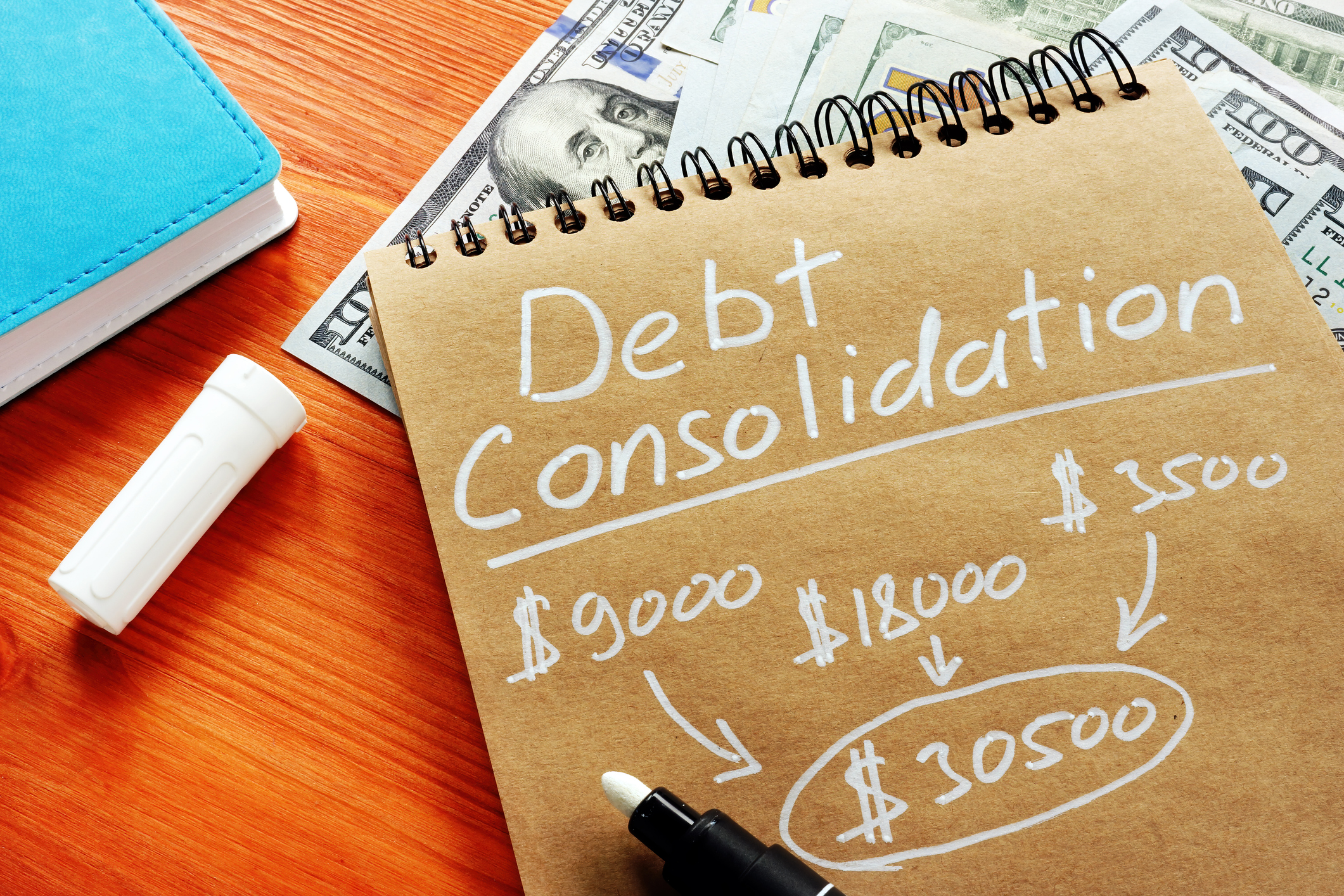
Is Debt Consolidation a Good Idea? Pros, Cons, and When to Avoid It


Key takeaways
- Debt consolidation works best for borrowers with steady income who can qualify for a lower rate than the combined amount they're currently paying.
- It doesn't reduce the total amount you owe. Instead, it changes how you repay it.
- The biggest reason consolidation backfires is continuing to spend on the cards you just paid off.
- Fees, origination costs, or an interest rate similar to your existing ones can negate any potential savings
Debt consolidation can be a good idea for borrowers with steady income, qualifying credit, and the discipline to stick to a fixed repayment plan. However, in some situations, it can make things worse. The real question isn't whether consolidation works (it does, for many people), it's whether it fits your financial situation, credit profile, and spending habits.
The Consumer Financial Protection Bureau flags those same factors as the ones most likely to determine whether consolidation actually helps.
When Is Debt Consolidation a Good Idea?
Consolidation is most likely to help when several of the following are true at the same time:
You have steady, verifiable income.
Your credit score is good enough to qualify for a lower interest rate.
Your debt is large enough that the savings outweigh the fees.
The fixed monthly payment amount fits into your budget.
You're willing and able to stop using the cards or accounts that you pay off with consolidation.
Consolidation simplifies repayment, lowers total interest cost, creates a clear payoff date, and can improve your credit score over the following 12 to 24 months as balances drop, provided all of the above factors are true.
What Are the Real Benefits?
1. Lower Interest Costs
Lower interest costs are the main reason most people choose to consolidate. Replacing high-interest credit card debt (which currently averages around 21.52%, according to the latest Federal Reserve data) with a lower-rate loan (currently roughly 12% on average) can save thousands of dollars over the life of the loan.
2. Simplified Monthly Payments
If you're juggling multiple accounts, having a single due date, payment, and balance can help reduce the risk of missing the monthly payments.
3. A Defined Payoff Date
Credit cards operate on revolving credit, which can keep you on a debt treadmill. Paying them off can take decades if you only make the minimum payments. A consolidation loan has a fixed end date, often 2 to 7 years out.
What Are the Drawbacks?
Consolidation isn't free, and it isn't risk-free. There are several cons to consider before committing to the process.
Origination fees average between 1% and 8%, and can significantly reduce or erase savings on smaller loans.
Choosing a longer repayment term lowers the monthly payment but increases the total interest paid.
Spending on paid-off cards often leaves borrowers with more debt than they started with.
Lower-credit borrowers may not qualify for a rate low enough to make consolidation worthwhile.
Secured options like HELOCs trade unsecured debt for debt that puts your home at risk.
When Is Debt Consolidation a Bad Idea?
Debt consolidation can be helpful in the right situation, but it's not always the best choice.
1. You Haven't Addressed the Spending Behavior
The most common failure occurs when someone consolidates $20,000 in card debt, frees up the cards, and runs them back up over 18 months. Now there are loan payments plus growing, revolving balances. If you can't commit to not using the paid-off accounts, consolidation can make things worse.
2. The Numbers Don't Work
If your credit profile only qualifies you for a 22% loan when your card debts average 21%, you're ultimately paying more money to consolidate. Most lenders (especially online lenders) offer pre-qualification with a soft credit check, which allows you to see your expected rate before committing or taking a hit on your score for the necessary hard inquiry.
3. Fees Wipe Out the Savings
Consolidating $7,000 with an 8% origination fee ($560) and a modest rate reduction can erase most of the first-year savings. Look at the total cost over the life of the loan, not just the monthly payment.
4. Your Debt-to-Income Ratio Is Already Too High
If it already takes most of your income to make the minimum payments on your current debt, a small reduction may not fix the underlying affordability problem. A debt management plan or other hardship program may be a better fit.
5. You're Already Significantly Behind
Once accounts are 60+ days delinquent or in collections, consolidation becomes harder to qualify for and less effective. Working directly with creditors, a credit counselor, or a bankruptcy attorney can make more sense.
6. You're Considering a HELOC for Unsecured Debt
A HELOC has lower rates but converts unsecured debt into debt secured by your home. If your income drops or you can't make consistent, on-time payments, foreclosure becomes a real risk. For many borrowers, the rate savings aren't worth that trade-off.
Pros and Cons at a Glance
Pros | Cons |
One monthly payment instead of several | Doesn't reduce the total amount you owe |
Often lower total interest cost | Fees can offset savings |
Defined payoff date | Longer terms can increase the total interest cost |
Potential credit score improvement over time | Risk of running up balances again on paid-off cards |
Reduced stress and easier tracking | Lower-credit borrowers may not qualify for a significantly beneficial rate |
How to Tell If Consolidation Is the Right Choice for You
Here's a practical self-check list to use before applying for debt consolidation:
Have I checked my actual rate? Use pre-qualification (soft credit check won't affect your credit score) with 2 to 3 lenders.
Does the new rate beat the average of my current rates? Calculate honestly, not just against your highest-APR card.
Will fees still leave me ahead? Add the origination fee to the total interest and compare the two.
Have I addressed the spending pattern that created this debt? If not, consolidation alone won't fix it.
Can I afford the new monthly payment without straining my budget? If it's tight, proceed with caution.
If most of your answers are yes, consolidation may be a reasonable next step, or at least worth considering. If you have several no answers, especially around spending, it's worth pausing before moving forward.
When to Consider Alternatives Instead
Other paths may fit better if:
Your debt is more than you can realistically repay within 5 to 7 years.
You can't qualify for a lower rate.
You're 60+ days behind on accounts.
You need outside accountability or behavioral support, not just a financial product.
In those cases, a debt management plan, or, as a last resort, bankruptcy, may be a more appropriate alternative.
Conclusion
Debt consolidation can be a good idea when the numbers work. However, addressing the spending pattern that caused the debt is also crucial to success. Debt consolidation can simplify repayment, reduce interest costs, and create a real way to reduce or eliminate debt for borrowers who have steady, reliable income, qualifying credit, and the willingness and ability to commit to the process. The right answer for you depends on your specific situation.
FAQs
Does debt consolidation save money?
Debt consolidation can save money when the new rate is meaningfully lower than the average current rate of your existing debts, and only when fees don't override the savings. For some borrowers, the savings are substantial. For others, the math doesn't actually work out.
Will debt consolidation hurt my credit score?
Consolidating debt often briefly affects your credit score. A new loan typically causes a 5 to 20-point dip from the hard inquiry and new account. Consistent on-time payments tend to improve your score over the next 12 to 24 months.
Is debt consolidation worth it for small amounts of debt?
Debt consolidation is often not worth it for small debt amounts. For balances under $5,000, fees can undermine most of the potential savings. A balance transfer card with a 0% intro APR or a focused payoff plan may be better options.
What's the biggest mistake people make with debt consolidation?
Continuing to spend on the cards they just paid off is the biggest mistake people make when consolidating debt. Consolidation gives you a clean slate. However, it doesn't, by itself, change the habits that created the debt. If the spending pattern doesn't change, the loan just adds to the total.