What Is Debt Consolidation and How Does It Work?


Key takeaways
- Debt consolidation combines multiple debts into one monthly payment
- It often lowers interest costs but does not usually reduce the total principal balance owed
- Common consolidation methods include personal loans, balance transfer cards, and HELOCs
- Typical consolidation loan amounts range from $10,000 to $80,000
- Success depends on making consistent payments and avoiding new debt
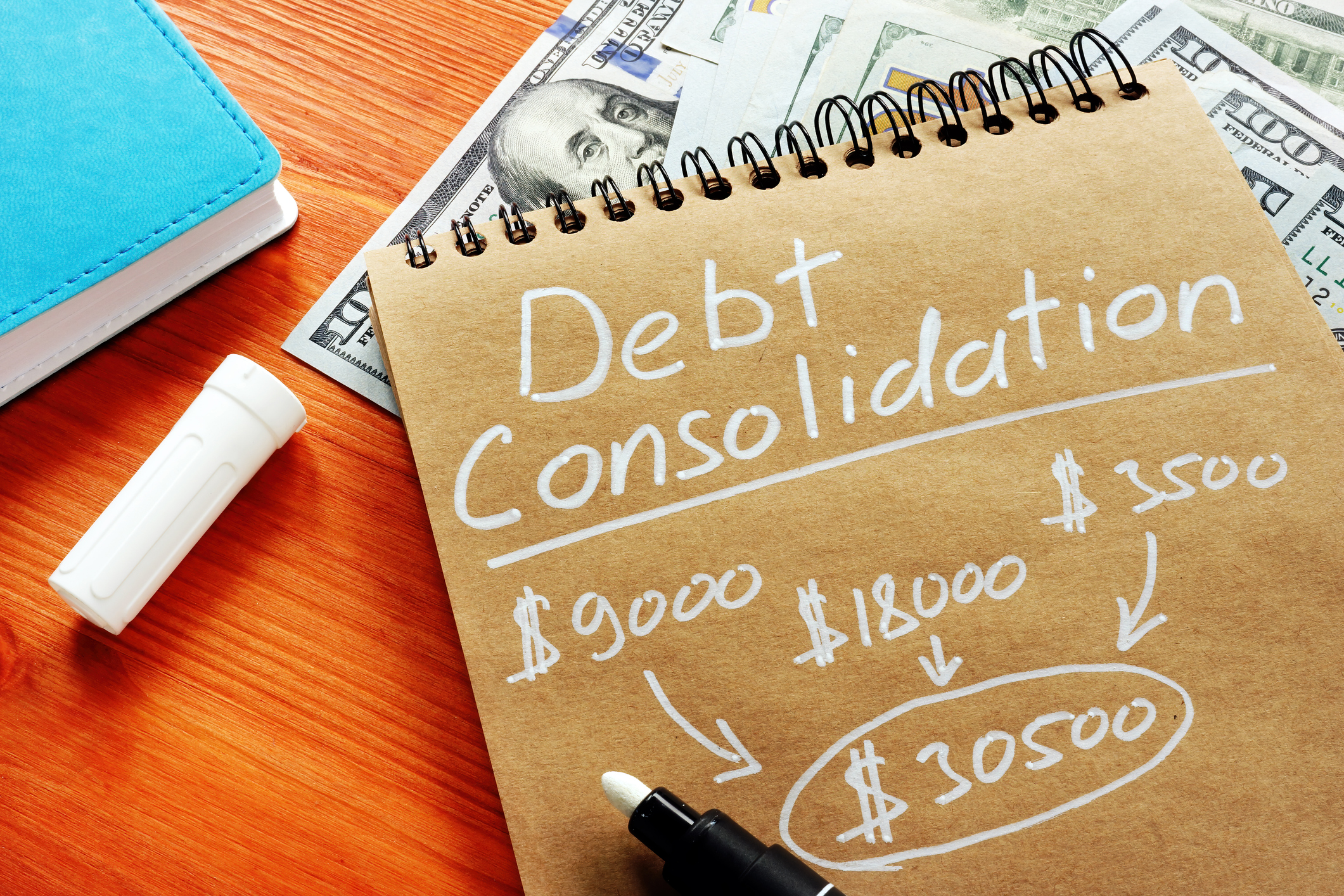
Debt consolidation is the process of combining multiple debts into a single monthly payment, typically with the goal of lowering interest costs and creating a more predictable repayment timeline.
Consolidation can become necessary when debt balances increase, interest adds up faster than expected, and keeping track of multiple due dates becomes more stressful each month. At some point, it stops feeling manageable, and finding a better way becomes the priority.
In other words, if you’re researching it, there’s usually a reason beyond just simplifying a few bills.
Understanding how it works, what it costs, and when it makes sense can help you decide whether it fits your situation.
How Does Debt Consolidation Work?
Debt consolidation works by replacing multiple debt accounts with a single new loan or repayment plan, allowing borrowers to make a single monthly payment, often at a lower interest rate than the combined interest on their existing debts.
In simple terms:
You take out a new loan generally equal to your total debt amount
Use it to pay off your existing debts
Make one monthly payment going forward
The goal is to:
Simplify your finances
Potentially reduce your interest rate
Create a predictable and reliable payoff timeline
What Types of Debt Can Be Consolidated?
Debt consolidation is most often used for unsecured debts, those not tied to an asset, such as credit card balances, personal loans, and medical bills. Secured debts like mortgages and auto loans typically don't qualify. However, home equity loans can sometimes be used to consolidate other types of debt, though doing so puts your home at risk if you're unable to repay.
Common Eligible Debts
Credit card balances
Personal loans
Medical bills
Debts That Often Don't Qualify
Federal student loans (except in cases of student loan debt consolidation)
Mortgages
Auto loans
Debts in collections (eligibility varies by lender and collection status)
What Are the Most Common Debt Consolidation Methods?
There are several ways to consolidate debt. Each has different requirements and trade-offs. The most common method people refer to when talking about debt consolidation involves taking out a personal, or signature, loan to pay off existing debts.
Choosing the right method depends on your credit, income, and comfort level with secured versus unsecured debt.
Method | How It Works | Best For | Key Consideration |
Personal Loan | Fixed-rate loan pays off debts | Larger balances, steady income | Requires credit approval |
Balance Transfer Card | Moves debt to low/0% APR card | Smaller balances | Promo period limits |
Debt Consolidation Program | Structured repayment via a counseling agency | Those needing guidance | Accounts may be closed |
HELOC / Home Equity Loan | Uses home equity for lower-rate borrowing | Homeowners with equity | Risk to your home ownership if you fail to pay the debt back |
How Much Can You Save With Debt Consolidation?
Because you're not eliminating debt and instead, paying it back, saving money isn't guaranteed when consolidating debt. However, many borrowers do end up saving substantial amounts. It all comes down to your old interest rates versus your new interest rate, fees, and repayment timeline. The biggest savings happen when replacing high-interest credit card debt with a lower-rate loan.
Example Interest Comparison
APR | Monthly Payment | Total Interest (3 Years) | |
Credit Card | 22% | ~$310 | ~$3,150 |
Personal Loan for Debt Consolidation | 10% | ~$323 | ~$1,600 |
HELOC | 8% | ~$315 | ~$1,250 |
Even when your monthly payments are similar, the reduction in interest can lead to meaningful long-term savings.
However, results vary based on:
Your credit score
Loan terms
Fees and promotional conditions
What Does Debt Consolidation Cost?
Debt consolidation is not free, and costs vary by method.
Typical Costs and Fees
Cost Type | Typical Range |
Loan Origination Fees for debt consolidation or personal loans | 1% to 10% of the loan amount |
Balance Transfer Fees for credit card balance transfers to a low or 0% interest card | 3% to 5% of the transferred balance |
New Interest Rates | Typically 7% to 36% APR, depending on credit score and lender |
These costs can reduce your total savings, so it’s important to evaluate the full picture before choosing a solution.
How Long Does Debt Consolidation Take?
The timeline for consolidation depends on the type of loan or repayment plan you choose, and how consistently you make your payments. While some benefits can happen quickly, paying off the total debt generally takes several years.
You may notice reduced stress right away simply because you have fewer payments to manage. However, realizing meaningful financial improvement, such as lower balances and better credit, takes time and depends on consistent, on-time payments throughout the process.
The table below outlines what you can expect at each stage of the process.
Stage | What to Expect |
Immediate | One payment replaces multiple bills, simplifying your monthly payment obligations and potentially reducing the dollar amount. |
Short Term (within one year) | Credit score may dip slightly due to opening a new account, then stabilize as on-time payments build. |
Mid-Term (1 to 3 years) | Balances decrease steadily, and you may notice significant interest-cost savings. |
Long-Term (2 to 5 years) | Debt payoff is complete or nearing completion, depending on your loan term and payment consistency. |
How Does Debt Consolidation Affect Your Credit?
Debt consolidation can affect your credit in both the short and long term. In many cases, a credit score can drop by 5 to 20 points due to a new hard inquiry and a new account. This initial dip is temporary, provided you make consistent, on-time payments to the new loan.
Over the next several months, with timely payments, many borrowers see their scores increase due to an improved credit ratio and a decreasing loan balance.
In the long term, debt consolidation can strengthen your credit profile. A history of on-time payments and lower overall debt levels can help demonstrate responsible credit use.
The most important factor throughout the process is payment behavior. Consistently making payments on time plays a significant role in whether your credit improves, stays the same, or declines.
Is Debt Consolidation Worth It?
Debt consolidation can be a practical way to manage debt. However, its overall effectiveness depends on your financial situation and how you approach repayment.
Pros
Simplifies multiple payments into one
May lower your total interest costs
Creates a structured payoff plan
Can improve your credit score over time
Cons
Fees may reduce savings
Requires qualifying for whichever method you choose
Doesn’t eliminate debt
Risk of new debt if spending habits remain
When Does Debt Consolidation Make Sense?
Debt consolidation may be a good fit if:
You have a steady income.
Your debt is manageable, or can be with reorganization, relative to your income.
You can qualify for lower interest rates
You want a structured repayment plan
It may not be the best option if:
You're already significantly behind on payments
You can't qualify for new credit (varies heavily by lender)
Your debt is too large to repay realistically
Conclusion
Debt consolidation is most effective for borrowers with steady income, qualifying credit, and a commitment to consistent payments. It simplifies repayment and can meaningfully reduce interest costs, but it requires financial discipline to work.
Whether it's the right choice for you depends on your income, total debt, and ability to follow through on a structured repayment plan.
FAQs
Does debt consolidation reduce the amount you owe?
Debt consolidation reorganizes your debt into a single payment but does not typically reduce the total principal balance you owe. The savings that can accompany consolidation usually come from either a lower payment, less interest cost, or both.
Can debt consolidation hurt your credit?
Consolidating debt can cause a small, temporary credit score drop due to a hard inquiry and a new account. However, making consistent payments over time can help improve your credit overall.
What credit score do you need for debt consolidation?
Most lenders require a credit score of 620 or higher for a competitive debt consolidation loan, though some lenders work with borrowers below that threshold. In general, a higher credit score leads to better interest rates and loan terms.
Is debt consolidation better than bankruptcy?
Debt consolidation is regarded as the better alternative in most cases. However, it's only a better fit if you can afford to repay the debt. Bankruptcy may be more appropriate when repayment is no longer realistic.