New US Senior Driving License Rules: Myth Vs. Fact
Despite viral claims, there is no nationwide senior driving retest mandate in 2026, but certain states have adjusted renewal policies.
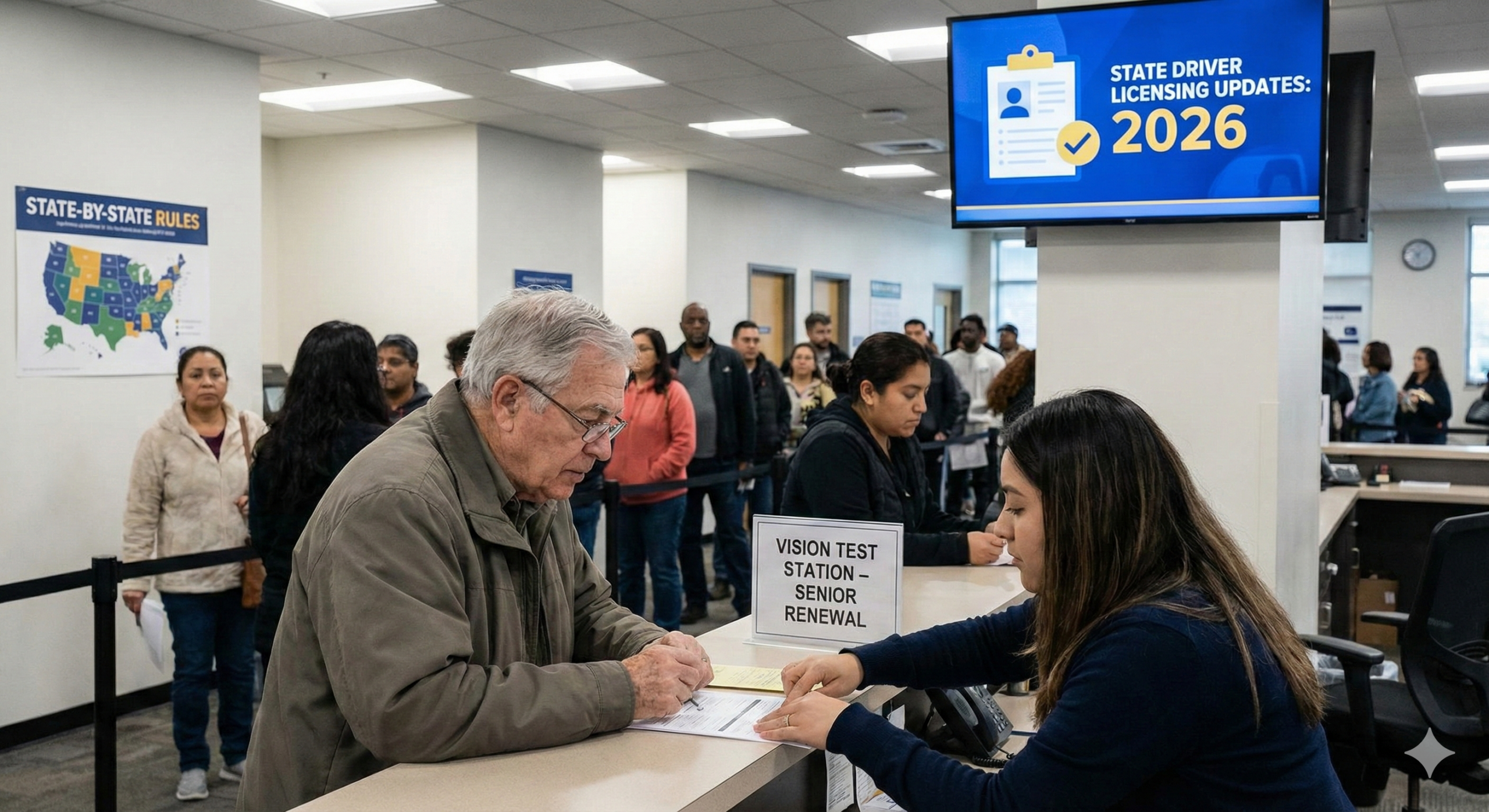
In-person renewals and vision screenings are part of updated licensing procedures in several states.
Image source: Gemini
New US Senior Driving License Rules: Myth Vs. Fact
Written by Tammy McKinney, RN, a registered nurse and consumer writer specializing in senior health, safety, and personal finance topics. Drawing from years of clinical experience, she breaks down complex policy and lifestyle decisions into clear, compassionate guidance readers can trust.
Recent headlines and viral posts are sparking confusion about new U.S. senior driving license rules. However, no federal law requires seniors to retake the driving test solely on the basis of age, though some states have updated license renewal, vision testing, and in-person requirements for seniors.
In this article, we’ll review changes and current rules to help you understand your responsibilities and state requirements. Keep in mind that licensing rules discussed in this article pertain to non-commercial driver’s licenses only. Commercial driver’s license holders must follow additional regulations.
Are There New US Senior Driving License Rules in 2026?
Short answer:
There is no single federal rule regarding senior driver’s licenses, but states continue to adjust renewal and testing policies.
Driver’s licensing does not fall under federal jurisdiction and is instead handled by each state. This means the U.S. Congress does not set rules governing driver’s licenses.
To obtain and maintain driving privileges, you must stay up to date with and follow your state’s licensing guidelines. Let’s take a look at what rules have changed recently.
What Has Actually Changed for Older Drivers?
Short answer:
Several states have adjusted renewal frequency and testing requirements for older drivers.
States that have updated driver’s license requirements are focusing on driver readiness, and not automatic, age-based license loss. Some of the new requirements include:
- Shorter license renewal periods for drivers age 70 and older
- In-person renewals rather than online options
- Vision test required at renewal based on age
At What Age Do Senior Driving Rules Typically Change?
Short answer:
Most age-based rules begin between ages 70 and 75, depending on the state.
Regardless of state, age alone does not determine whether you can renew your driver’s license. However, it is common for states to impose additional steps for residents over the age of 70, 75, or even 80.
Are Vision Tests Now Required More Often?
Short answer:
Yes, in some states, eye exams are now required more often.
Many states require vision tests at renewal for seniors over a certain age. In some cases, an outside exam, performed by your own eye doctor, is acceptable, while other states require the screening to take place at the motor vehicle center. The vision screening typically focuses on visual clarity, rather than overall eye health.
Do States Now Require Road Tests for Senior Drivers?
Short answer:
In most cases, laws do not require road tests for senior license renewal based solely on age.
Typically, rules for senior drivers do not include a road test for license renewal. However, when safety concerns arise from medical reports, repeated violations, or driving incidents, the state may require a retest.
Are Cognitive Tests Required for Drivers Aged 70 and Older?
Short answer:
No. Cognitive tests are not routinely required solely on the basis of age.
While some online sources state that drivers over age 70 are required to undergo cognitive tests to renew their driver’s license, this claim is largely false. However, if family members or medical personnel raise medical concerns, the state may require an exam to ensure road safety.
Related Article: Top Travel Ideas for Seniors on a Budget
State Examples: Where Rules Have Recently Changed
Recent Updates:
Below are two examples of recent state-level changes. It is imperative that you always check your state’s laws and regulations concerning driver’s licensing to understand exactly what renewal requirements you fall under.
California:
In October of 2024, California eliminated the mandatory written test for drivers aged 70 and over with a clean driving record. However, California law still requires drivers aged 70 and older to renew their licenses in person and complete a vision test. Drivers with certain medical conditions, such as Alzheimer’s disease, Dementia, Cataracts, Macular degeneration, or diabetes, may be subject to license revocation based on their symptoms or medication requirements.
Illinois:
In 2025, lawmakers updated the Illinois driver’s licensing regulation to raise the age for mandatory road tests from age 79 to age 87. The state requires drivers aged 87 and older to complete an annual in-person road test, and those aged 81-86 to complete the exam every two years. The bill also updated reporting to allow family members to submit medical information if they believe a condition could interfere with the driver’s ability to remain safe on the road.
- Note: HB1226 goes into effect on July 1, 2026. Therefore, you’ll find that Illinois’ DMV has not yet updated its website to reflect the new regulation.
Misinformation Alert: What’s Being Shared Online — and What’s Not True
Takeaway:
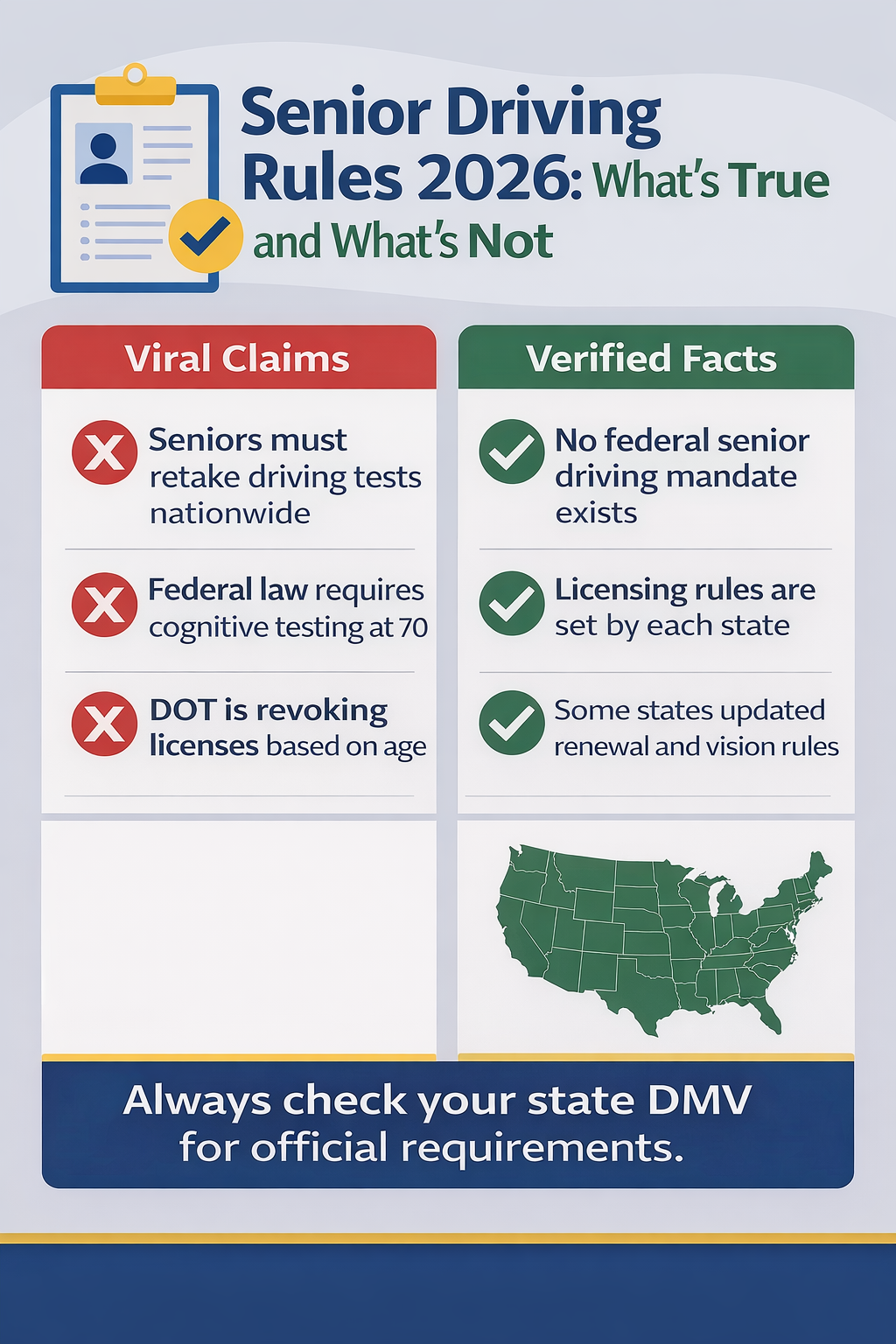
Claims being shared online about new federal laws dictating additional requirements for seniors renewing their driver’s licenses are FALSE. While some of these claims have gone viral and sound believable, there remains no federal law that governs non-commercial driver’s licenses.
- The Department of Transportation has NOT implemented a nationwide mandate.
- No federal law exists to require driver’s license revocation based on age.
- There are no federal laws that require cognitive testing for renewal of driver’s licenses.
Why Are States Updating Senior Driver Rules Now?
Short answer:
New regulations for seniors are not rooted in age discrimination, but in safety data. The National Highway Traffic Safety Administration (NHTSA) publishes data related to accidents and fatalities involving drivers aged 65 and older. Takeaways include:
- A growing number of drivers aged 65 and older
- An increasing number of fatalities involving older drivers since 2021
- Seniors maintaining personal independence and licenses for longer periods
- A focus on balancing independence and public safety
Can Family Members Report Concerns About an Older Driver?
Short answer:
Yes, in some states, family members may submit safety concerns to the DMV.
Reporting a concern regarding a driver’s ability to safely maintain their driving privileges usually falls on medical personnel. States such as Pennsylvania and New Jersey impose strict requirements for medical professionals to report conditions that cause lapses in consciousness, seizures, dementia, visual impairments, or cognitive impairments.
Additionally, some states, such as Illinois, allow immediate family members to file reports with the DMV (starting July, 2026).
What Should Older Drivers Do Before Renewing Their License?
Short answer:
Prepare early and check state-specific requirements before starting your license renewal process.
To Dos:
- Visit your state’s DMV website to confirm driver’s license renewal requirements
- Review renewal timelines
- Schedule a vision test if needed
- Schedule a road test if required
- Gather medical documentation if requested
Related Article: Best Senior Discounts