Written by Deane Biermeier, a Certified Financial Educator who has studied and now helps people apply real-world strategies for budgeting, debt management, and personal finance.
When money feels tight, the advice you’re likely to hear is often the same: pay down your debt faster, save more, improve your financial habits, and everything will be great.
Fine. But that advice leaves out one crucial question:
Where does that magical extra money actually come from?
If your budget already feels stretched, finding additional cash isn’t always as easy as it sounds.
However, it may be there if you know where to look. You may be able to find just enough by adjusting expenses you’re already paying.
It’s not magic. But even small amounts can add up over time. And when you intentionally redirect that extra cash toward paying down balances, building an emergency fund, or contributing to retirement accounts, it can have a meaningful impact on your overall financial health.
Finding extra money in your budget is only half the equation. Using those savings in the most effective way can make an even bigger difference over time. If you’re carrying significant unsecured debt, learning more about Accredited Debt Relief can help you evaluate whether a debt solution could accelerate your payoff strategy and improve your overall financial outlook.
Related Article: What to Do With Extra Money – A Step-by-Step Guide
Key Takeaways
|
How to Find Extra Money in Your Budget
Finding extra money in your budget usually comes from identifying small, repeatable savings in everyday expenses like energy, groceries, subscriptions, and insurance. You can redirect even modest reductions, say $20 to $50 per month, toward paying down debt, building savings, or improving long-term financial health.
What Does “Finding Extra Money in Your Budget” Mean?
This isn’t some mystical thing. Finding extra money in your budget simply means identifying some existing expenses that you can potentially lower or optimize to create additional cash flow.
We’re not talking about how to increase your income — that’s a completely different topic. What we’re focusing on is reallocating money you’re already spending rather than earning more.
A Simple 3-Step Way to Find Extra Money in Your Budget
A practical way to approach this is to break it into three steps:
- Step 1: Identify Hidden Expenses
Energy bills, subscriptions, insurance, and everyday spending - Step 2: Free Up Small Amounts of Cash
Reduce or adjust those expenses. - Step 3: Redirect That Money Intentionally
Use it to pay down debt, build savings, or reduce interest costs.
NoteThe Consumer Financial Protection Bureau makes an important statement regarding personal budgeting that applies well to this topic. “Don’t edit your budget to reflect what you ‘could’ or ‘should’ be spending. The goal here is to assess what you are spending…(and) decide what changes you might be able to make in the future.“ |
Where to Look When You Need to Find Extra Money in Your Budget
We’re not likely to find one big chunk of extra money lying around when we already have a tight budget. The best places to look for extra cash are at smaller, overlooked expenses that you can adjust without dramatically changing your lifestyle.
Common areas to review include:
- Subscriptions that automatically pull from your checking account or credit cards
- Insurance premiums that may no longer be competitive
- Grocery and dining habits
- Monthly bills that have quietly increased over time
One of the easiest and most reliable places to start looking for savings is your energy bill. You get one every month, and it tends to creep up over time.
1. How to Lower Your Energy Costs
If you’ve ever wondered how to save money on your energy bill, you’re not alone. It’s one of the few expenses where small changes can lead to consistent, and sometimes significant, monthly savings.
You don’t need major upgrades to start seeing results.
Quick Ways to Lower Energy Use
- Adjust your thermostat slightly
- Turn off unused electronics and reduce “phantom” power draw
- Wash clothes in cold water
- Use fans to reduce heating and cooling costs
Low-Cost Improvements
- Switch to LED lighting.
- Seal drafts around windows and doors
- Use smart power strips.
Even modest changes can free up $25 to $75 per month, creating extra cash without increasing your income or making big sacrifices.
2. Ways to Lower Your Cost of Living
Lowering your energy bill is a strong starting point, but it’s just a start. The next place to look is where you may spend money on living expenses.
Rethink Brand Loyalty at the Grocery Store
Brand-name products can cost significantly more than store brands, even when the differences are minimal.
Switching to store-brand items in categories like soda, pantry staples, and household goods can often save 20% to 40% per item. Making this simple decision at the store can quickly translate into meaningful extra money each month.
Shop Around for Insurance
When it comes to car, home, renters, and other insurance coverages, loyalty doesn’t always lead to lower premiums. Insurance providers may raise rates gradually, and better pricing may be available elsewhere.
There are typically no penalties for switching, as long as you maintain continuous coverage. Comparing quotes periodically can help reduce costs without lowering protection.
Review Subscriptions, Apps, and Your Cell Phone Plan
Recurring charges are easy to miss because they’re automatic and easy to forget about. (I do it all the time and have to periodically go through my phone deleting app subscriptions.)
Streaming services, app subscriptions, and even your cell phone plan may include features or services you no longer use. Reviewing these regularly can help free up extra cash that’s been sneaking out of your account each month.
Many people find success using budgeting apps to track spending. Using one can make it easier to identify patterns and move more money into savings. Additionally, many of the apps can identify, alert you to unused app charges, and even help you cancel them.
Adjust Everyday Spending Habits
Small, everyday lifestyle changes can add up, too:
- Brewing coffee at home
- Planning meals to reduce takeout or restaurant purchases
- Combining errands to save fuel
These aren’t major lifestyle changes, but together, they can reduce how much you spend overall. Small changes can mean more money in your budget for improving your financial health.
Reevaluate Monthly Services and Bills
Many of your everyday service providers offer promotions or plan updates that you can opt into to save cash.
Look at these, and similar, opportunities from your existing carriers:
- Internet and cable providers may offer lower-cost options or promotional deals.
- You can often adjust your phone plan to delete features or data time that you don’t use.
- Many providers offer bundling deals that can save money.
- Sometimes you can switch providers to get a better deal.
Even a small reduction in a few categories can create noticeable savings over time.
Related Article: Late Car Insurance Payment? What Happens and How to Avoid Cancellation
How Small Savings Can Add Up Over Time
While identifying and saving $20, $50, or $75 per month may not sound like a life-changing, WOW moment, consistency can matter here more than big-dollar bumps. Redirecting a small but consistent amount each month can actually make a huge difference if you play your cards right. This is especially true when considering how interest rates work and how they affect both debt and savings growth over the long term.
In other words: Applying a small amount of savings toward debt can have a major impact, often in a shorter time than many expect.
Pro TipFrom our on-staff Certified Financial Educator You don’t need to find hundreds of dollars to get started. Even a small amount of extra money each month can be enough to begin building momentum. Many are surprised by how quickly they realize a big change, not only financially, but emotionally as well. Start by redirecting saved money from just one source, like your energy bill, into a separate savings account or toward a single debt. Then, automate that transfer each month so you don’t have to think about it. |
Putting Your Extra Money to Work
Once you’ve identified where a little extra money can come from, the next step is to put it to work in a way that supports your financial goals.
1. Pay Down Loans More Efficiently
It’s common to hear that making extra payments can reduce interest and shorten loan terms. However, it’s important to do it smart to maximize the beneficial effects. Use an early loan payoff calculator to see how much time and money you could save by adjusting the extra-payment dollar-amount figure in the tool. You may be surprised by how a little can go a long way.
2. Build Momentum With a Structured Payoff Plan
If you’re managing multiple balances, consistency, more than the size of each payment, is key. The best way for most people to do this is to start some version of a snowball debt-reduction budget.
Redirecting extra cash toward a structured approach, like a debt snowball strategy, can help build momentum fast, as you pay off smaller balances and roll those payments forward.
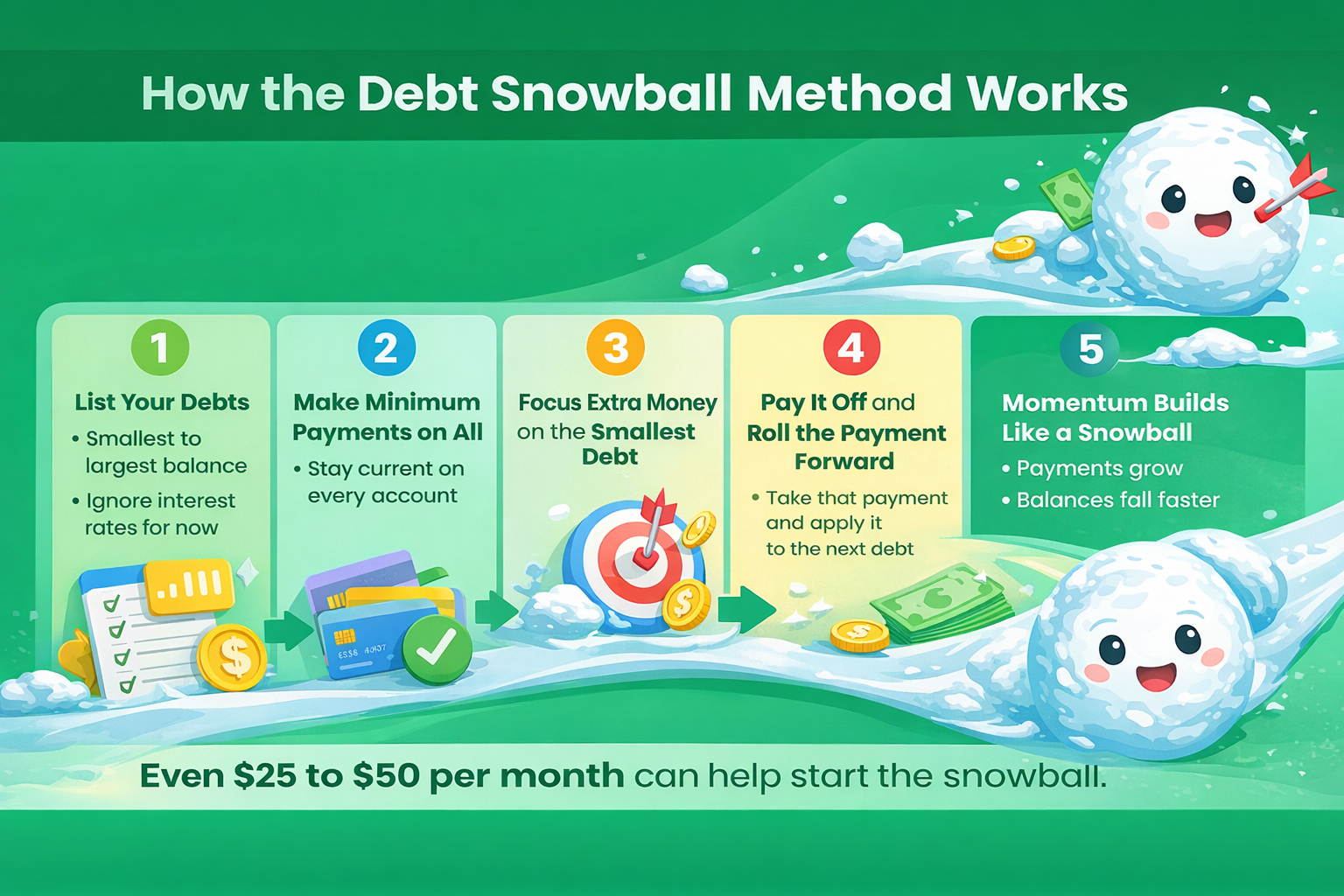
This infographic shows how to use extra money in your budget to build momentum with the debt snowball method.
3. Consider Other Options When Needed
In some situations, reducing expenses is a helpful first step, but it may not fully solve the problem.
Many people explore ways to combine balances into a single payment or potentially lower their interest costs on exiting debt. Understanding how debt consolidation works can help determine whether that approach makes sense based on your situation.
For those with student loans, exploring student loan refinancing options may also be worth evaluating, depending on current rates and loan terms.
Related Article: What to Look for in the Most Trusted Review Sites
Why This Approach Works
Instead of trying to generate new income right away, this approach focuses on reclaiming money that is already part of your budget.
- It doesn’t require a second job.
- It’s not dependent on a tax refund or one-time cash windfall.
- It can help you to learn how consistent, albeit small, changes can impact your overall financial outlook and make a lasting change.
Related Article: LendingTree Vs Happen Bank