Trustedcompanyreviews.com offers free content, reviews and ratings for consumers to read, aimed at helping them compare their options. We may receive advertising compensation from companies featured on our website, influencing the positioning and sequence in which brands (and/or their products) are displayed, as well as affecting the assigned ratings. Please note that the inclusion of company listings on this page does not constitute an endorsement. We do not feature all available providers in the market. With the exception of what is explicitly outlined in our Terms of Service, we disclaim all representations and warranties regarding the information presented on this page. The details, including pricing, displayed on this site may undergo changes at any time.
Budget Calculator
Creating a budget is essential when taking control of your money. Popular rules like the 50/30/20 budget are helpful starting points, but they don’t always reflect real-world experiences and can be too rigid in some situations. This budget calculator lets you choose a plan that works best for you. It also allows you to create your own to meet your needs.
Test multiple budgeting plans against your actual income and expenses, and adjust your budget as necessary to help you make clearer, more confident money decisions.
Budget Calculator
Enter your monthly after-tax income, choose a budgeting plan (50/30/20, 60/20/20, 70/20/10) or create your own, and add expenses to see how your spending fits into each bucket.
Income And Budget Plan
Use after-tax income (take-home pay). Then choose a plan to see your recommended dollar amounts for Needs, Wants, and Savings + Debt. — Or, build a custom budget by selecting "Custom" in the Budget Plan drop menu and add your own percentages.
Add Monthly Expenses
Add your expenses and assign each to a bucket so you can see how each fits into your budgeting plan.
| Expense | Amount ($) | Bucket |
|---|
Results
Needs, Wants, And Savings + Debt
| Bucket | Plan Amount | Your Expenses | Remaining / Over |
|---|---|---|---|
| Needs | — |
—
—
|
— |
| Wants | — |
—
—
|
— |
| Savings + Debt | — |
—
—
|
— |

Explore More Financial Tools And Options
Tight budget? Use these resources to compare debt consolidation, refinancing, or lending options, as well as other calculators that can help you improve your monthly cash flow.
How to Use This Budget Calculator
This budget calculator reflects proven budgeting methods and allows you to create your own working version. Here’s how to use it:
- Enter your monthly after-tax income.
This is your take-home pay after taxes and deductions. Using after-tax income gives you a clear picture of the cash you actually have available each month. - Choose a budgeting plan.
You can select a standard method, such as 50/30/20, try a more conservative approach (60/20/20 or 70/20/10), or create a custom plan based on your needs. - Add your monthly expenses.
Enter each expense and assign it to a bucket: Needs, Wants, or Savings + Debt. You can add or remove expenses as needed. - Review your results.
The calculator shows how much money is used in each category, how much remains, and whether you need to make adjustments. - Adjust the numbers.
Use this tool to modify your percentage and spending inputs to create a budget that works for you. The calculator automatically updates with each change to provide real-time feedback.
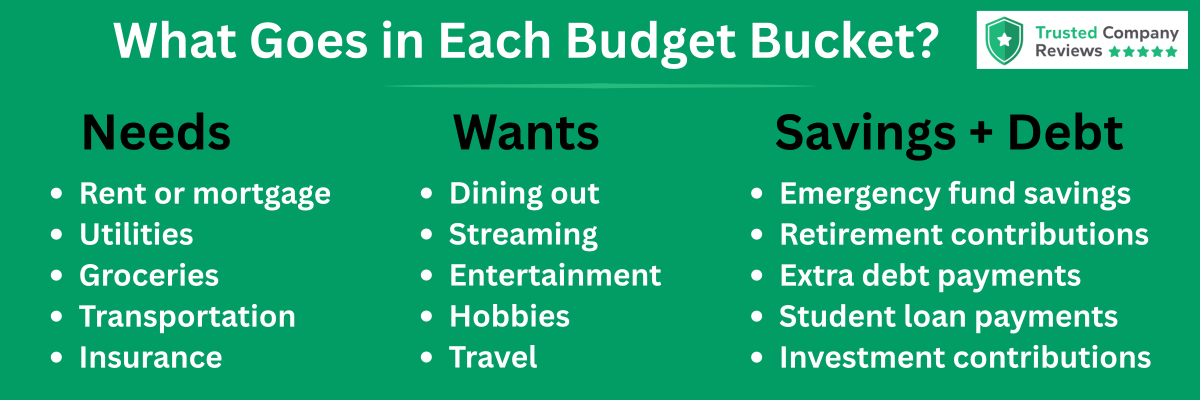
Examples of common expenses grouped into needs, wants, and savings plus debt to help you use your budget calculator more accurately.
Budgeting Plans You Can Test With This Calculator
Standard budgeting plans split your after-tax income into three categories: Needs, Wants, and Savings + Debt. The numbers in each plan represent the percentage of your income allocated to each category. This calculator lets you test different percentage combinations to see how well they fit your real expenses.
50/30/20 Budget
The popular 50/30/20 budgeting approach works well for people with moderate living expenses and steady, reliable income. It offers flexibility for general spending and prioritizes debt repayment and savings.
60/20/20 Budget
This plan budget focuses more on immediate necessities, making it a better fit if you have higher fixed expenses, like housing, but still want to meaningfully add to savings.
70/20/10 Budget
This budgeting option makes the most sense during short-term periods of tight cash flow or times when your income is lower than ideal. It leaves little room for setting money aside, and instead prioritizes immediate living expenses.
Custom Budget Plan
If standard rules don’t match your reality, a custom plan lets you set percentages based on your actual priorities, such as aggressively paying down debt, putting significant amounts in savings, or making a lifestyle adjustment. Just make sure your totals add up to 100% and support your long-term goals.
Pro Tip: Make Your Budget Work for YouFrom our on-staff Certified Financial Educator: Make your budget work for you, not the other way around. Creating a budget is the best first step in taking control of your money. However, many feel that having a budget in place is restrictive. In fact, a budget should be precisely the opposite of restrictive. A working budget reflects your real spending needs. Creating a budget that aligns with your specific financial situation lets you see where your money goes and make adjustments so you can spend on the things that matter most while avoiding overspending and minimizing unwanted surprises, regardless of your income level. |
What to Do If Your Budget Doesn’t Work
If your results show you’re over plan or running a monthly deficit, here are a few productive next steps:
- While your housing and transportation spending are often difficult to adjust, you can re-evaluate other fixed expenses, which can chew up a significant portion of your budget.
- Adjust your budgeting plan. A different percentage split may be more realistic.
- Improve your cash flow by bringing in more money or reducing non-vital spending. Even small changes can make a big difference.
If debt is a major obstacle, exploring options like consolidation or refinancing may help lower monthly payments and make your budget more manageable. Resources such as the best debt consolidation providers and the best personal loan lenders offer comparison tools to evaluate potential solutions.
How Much Can You Save with Debt Consolidation?
Check out these top companies:
More Calculator Resources
Here are more free calculator resources to help you run the numbers. These tools make it easier to plan efficiently, compare your options, and make confident money decisions based on real data.
- Personal Loan Calculator
- Debt Consolidation Calculator
- Home Equity Loan Calculator
- HELOC Payment Calculator
- Debt Snowball Calculator
- Early Loan Payoff Calculator
- Auto Loan Early Payoff Calculator
- Auto Loan Refinance Calculator
- Mortgage Payoff Calculator
- How Much Home Can I Afford Calculator
- Net Worth Calculator
- Savings Interest Rate Calculator
- Student Loan Early Payoff Calculator
Each calculator focuses on a different part of your financial picture and can complement the insights from this budget calculator.
Other Budgeting Methods You Can Adapt With This Calculator
The 50/30/20 rule is a popular budgeting method, but it’s not the only way to manage your money. Other successful approaches are also common and vary based on how you wish to categorize and handle your cash and spending.
The good news is that you can use this budget calculator to support any of these approaches by creating a custom budget, renaming expense categories, and adjusting dollar amounts and percentages.
Zero-Based Budgeting
Zero-based budgeting assigns a purpose to every dollar you earn, so your income minus expenses equals zero. You can use this calculator for zero-based budgeting by setting a custom plan, entering all of your expenses and savings goals, and adjusting amounts until your monthly net reaches $0.
Envelope Budgeting
Envelope budgeting divides your money into spending categories. While this approach is often associated with cash, today’s budgeting apps let you easily adopt it digitally. To adapt this method, you can label each expense category to match your “envelopes” and track how much you allocate to each bucket.
Pay-Yourself-First Budgeting
This method prioritizes saving before spending. To follow it with this calculator, allocate a higher percentage to the Savings + Debt bucket, then adjust your remaining expenses to fit within what’s left. This approach ensures saving stays a priority while still giving you a clear view of your spending.
Frequently Asked Questions
What is the best budgeting method?
The best budgeting method is the one you can stick with consistently. Popular options like the 50/30/20 budget work well for some people, while others need a more flexible or customized approach. Using a budget calculator to test different methods against your real income and expenses can help you find the option that fits your lifestyle and financial goals.
Is the 50/30/20 budget right for everyone?
No. While it’s a popular guideline, many people find that other percentage splits or a custom budget better reflect their real expenses and goals. Still others find that different approaches, such as the envelope method or a zero-based variation works best for them.