
If budgeting feels harder than it should, you’re not alone. Many people struggle not because they lack discipline, but because they run into the same common budgeting mistakes over and over again.
At Trusted Company Reviews, we review personal finance tools and strategies every day, and we consistently see how small budgeting issues can cause discouragement and derail personal financial progress. However, there's good news in that once you recognize these budgeting mistakes, they’re usually fixable with just a few smart adjustments.
An effective budget doesn't just track where your money goes. It should also help you make steady progress toward your financial goals. If high-interest unsecured debt is consuming too much of your monthly budget, learning more about Accredited Debt Relief can help you evaluate whether a debt solution could become part of a broader plan to strengthen your financial position.
The Official Website for Madison County, Iowa states, "The ability to manage money competently is (an) especially valuable quality in the conditions of financial crisis, when the purchasing power of the population is shrinking, inflation is rising, and currency exchange rates are completely unpredictable."
In other words, budgeting matters most when life is least predictable. Yet one of the most common budgeting mistakes people make is treating their budget as if it must be rigid and flawless, despite the fact that circumstances are constantly changing for most people.
Key Takeaways
- Most common budgeting mistakes are not caused by a lack of effort.
- Using real spending data makes your budget far more accurate and sustainable.
- Emergency funds play a role in long-term success, and allocating fun money is essential.
- A budget works best when you have a clear debt payoff strategy in mind.
- Regularly reviewing your budget can help catch small issues before they become problems.
1. Treating a Budget Like a Fixed Set of Rules
One of the most common budgeting mistakes is assuming your budget has to be followed perfectly and without fail. However, if a budget is too rigid, even small changes in living expenses can make you feel like you're failing.
What to do instead:
Think of your budget as a flexible plan, rather than a list of absolute rules. It should evolve as your income, expenses, and priorities change, and not punish you for normal life fluctuations.
Creating a realistic baseline with real numbers helps.
Check out our Budget Calculator to get a clear snapshot of where your money is actually going.
Related Article: Should I Buy a Car or House First?
2. Ignoring Emergency Funds Until You “Have More Room”
Another common budgeting mistake is postponing emergency funds until you feel like everything else is under control. Unfortunately, unexpected expenses rarely wait for the perfect moment.
What to do instead:
Build emergency savings directly into your budget, even if the amount is small. In most cases, this is advisable even if you're dealing with significant debt obligations.
Consistently making contributions to your future peace of mind will not only help to ease tension, but it will also help protect your budgeting plan and your overall financial well-being when surprises happen.
Related Article: How to Find Extra Money in Your Budget
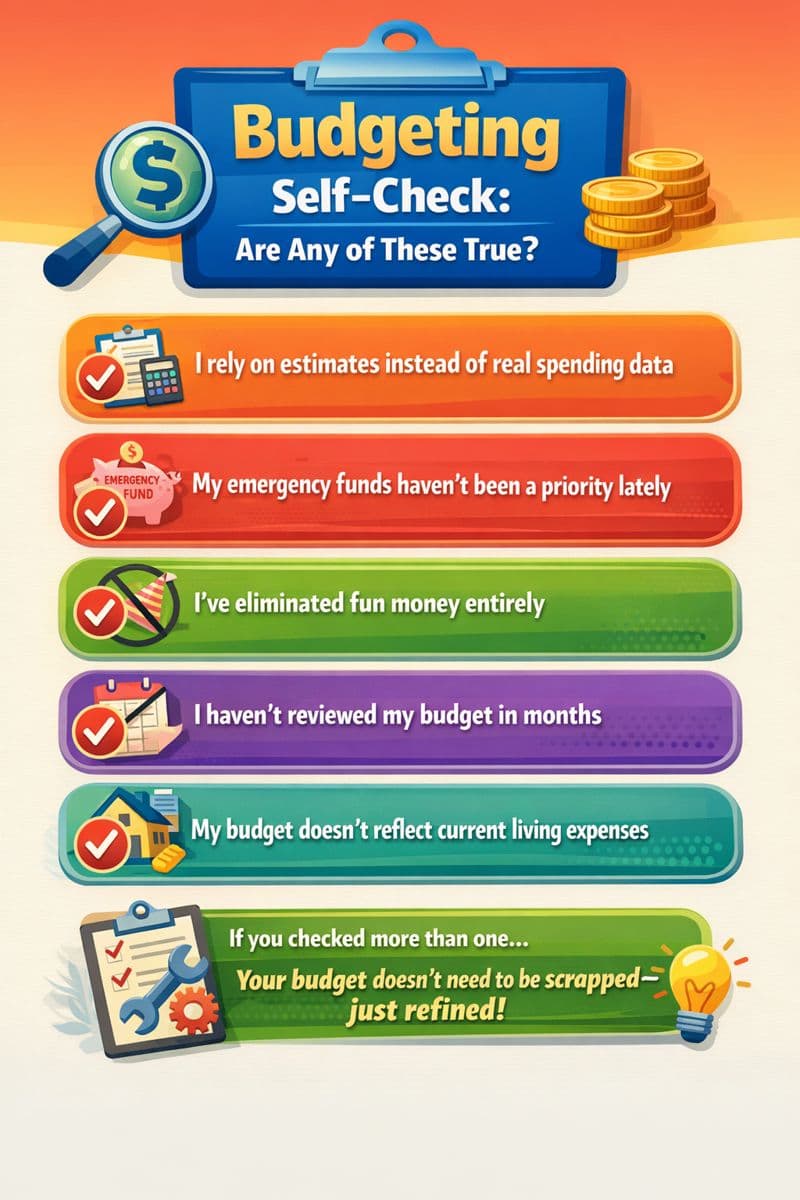
3. Guessing Instead of Using Real Spending Data
Many people budget with estimates instead of real numbers. This is one of the most damaging common mistakes, especially when we're talking about categories like groceries, transportation, and discretionary spending, that can fluctuate wildly.
What to do instead:
Base your budget on actual past spending. Real data creates clarity, and clarity makes budgeting far more effective.
This is where many budgets quietly drift off track, especially over time.
Review your past month's spending to make a plan for the following month. Then do it again next month and make any necessary changes.
Pro Tip: Let Your Past Spending Do the Hard WorkFrom our on-staff Certified Financial Educator: Instead of building a budget from scratch, or worse, guessing, start by reviewing what you’ve already spent. Review the last two to three months of transactions to discover spending patterns and catch and record even small dollar amounts. Many people miss these simply because they forget. These seemingly insignificant budget additions can make a big difference as the end of the month is closing in faster than your next paycheck date. |
A Quick Reality Check: The “Obvious” Mistakes Still Matter
If you already have a budget, you’re probably not making beginner errors like having no plan at all. That said, some of the most common budgeting mistakes can easily creep back in when we're not careful.
Revisit these budgeting basics, even if you're an experienced budgeter, to help make sure you're staying on track.
Some of the Most Common Budgeting Mistakes We Still See
Not tracking expenses as closely as before
Allocating less to emergency funds after seeing early success
Entirely eliminating fun money
Confusing wants with needs
Forgetting about irregular, quarterly or annual expenses
Spending impulsively without comparing options and trying to fit it into the budget later
Losing sight of long-term financial goals
These issues probably don’t mean that you broke your budget beyond repair, and they certainly don't mean the situation is hopeless. Typically, experiencing one or more of these just means you temporarily got a bit off-track, which is normal, really. The key is catching them early and doing timely, small repairs.
4. Cutting Too Much, Too Fast
Overly aggressive budgets often look great on paper but fail in practice. Cutting every discretionary spending category generally makes a budget unsustainable.
What to do instead:
Plan for balance when making your budget. Include a reasonable amount of fun money each month, even if it must vary from time to time.
Keeping fun money available can make your budget easier to maintain and reduce the chances that you'll burn out and give up.
5. Budgeting Without a Clear Debt Strategy
A budget that ignores debt payoff can get real old, real fast. Even if your budget feels right by making minimum payments on debt, if you're not using it to actively reduce debt, you're missing a great opportunity to improve your future financial picture.
What to do instead:
Pair your budgeting activities with a clear debt reduction or payoff strategy. It doesn't have to be fast or flashy. It needs to address more than just making minimum payments if debt is part of your current financial life.
Check out our Debt Snowball Calculator to help you organize balances and visualize your debt-reduction progress over time.
6. Forgetting to Review and Update Your Budget
A budget isn’t a “set it and forget it” tool. One of the easiest budgeting mistakes to make is failing to review and adjust it regularly.
What to do instead:
Make a bare-minimum rule to review your budget monthly, and more often if your money situation changes rapidly.
Even if your money situation feels like it's changing slowly, making small adjustments as you go can help keep small issues from becoming big problems.
Related Article: How Much Money Should I Save Before Buying a House?
Explore More Trusted Company Reviews Calculators
We've mentioned a couple of our budgeting calculators in the text above. However, budgeting takes into account your entire financial picture.
Here are several other financial calculators to help you get a handle on your budgeting numbers and financial well-being. You can also check out our overview of the Best Budgeting Apps to help you choose a digital way to help manage your finances.
Also Read:5-Point Financial Contract Trust Checklist: How to Know If a Company Is Legit
Frequently Asked Questions
Conclusion
Most budgeting struggles come down to strategy and not a lack of effort. By avoiding these common budgeting mistakes and grounding your plan in real numbers, budgeting becomes less stressful and more effective.
Keep this budgeting rule in mind: A good budget supports your lifestyle. It doesn’t restrict it.
About Author

Deane Biermeier
Deane Biermeier is a certified financial educator through the University of Minnesota and a respected authority in financial research, writing, and editing, renowned for his in-depth analyses and expert advice. With a distinguished career that previously spanned home improvement, real estate, and finance topics, Deane's role at Trusted Company Reviews focuses exclusively on finance. Deane has contributed to leading publications such as Forbes Home, US News and World Report, Newsweek Vault, and others. Since joining TrustedCompanyReviews.com in 2023, he has solidified his reputation as a crucial resource for clear, factual financial guidance.