


401(k) Hardship Withdrawals Rise as More Workers Tap Retirement Savings
401(k) Balances Rise, But More Workers Are Treating Them As Rainy-Day Funds

Financial stress is pushing more Americans to access retirement savings years before they plan to retire.
Photo Enhancement: ChatGPT
Written by Brett Holzhauer, Senior Financial Writer and graduate of the Walter Cronkite School of Journalism. Reviewed and edited by Deane Biermeier, Certified Financial Educator, at TrustedCompanyReviews.com.
With the turn of the calendar, employees are awarded the ability to max out a new limit in their workplace retirement plans through their employers. While balances are headed upward, so are the number of people using their funds for pre-retirement expenses.
It’s not only a sign of economic times faced by Americans, but also an alarming trend that can drastically affect workers’ ability to retire later in life. Here’s what you need to know.
Tomorrow’s savings and today’s headaches
For Americans avidly saving for their post-working years, account balances have flourished. According to Fidelity Investments, average balances across IRA, 401(k), and 403(b) are all up year-over-year. This can be attributed largely to a well-performing stock market, with benchmarks like the S&P 500 up nearly 18% in 2025.
However, while balances are going up, so are people having to dip into these funds for expenses today. While it’s never advised to dip into retirement funds prior to retirement, a record high 6% of Americans chose to take a 401(k) hardship withdrawal in 2025. This has tripled from 2% in 2018, according to Vanguard.
While a 401(k) loan can be a tool to use in a financial pinch, a hardship withdrawal can be a long-term financial disaster. Here’s an example of Alex, who decides to take out $25,000 of her 401(k), and ends up costing her much more than that.
| Category | Calculation | Amount |
| Starting 401(k) balance |
— |
$146,000 |
| Hardship withdrawal |
— |
$25,000 |
| Federal income tax (22%) |
$25,000 × 0.22 |
$5,500 |
| Early withdrawal penalty (10%) |
$25,000 × 0.10 |
$2,500 |
| Total taxes + penalties |
$5,500 + $2,500 |
$8,000 |
| Net cash received by worker |
$25,000 − $8,000 |
$17,000 |
| 401(k) balance after withdrawal |
$146,000 − $25,000 |
$121,000 |
| Future value of $25k if left invested (30 yrs at 7%) |
Compound growth |
~$190,000 |
| Long-term retirement savings lost |
Future value of withdrawn funds |
~$190,000 |
So not only did she receive far less than she withdrew, but she also cost herself a significant amount of money from her future self.
If you’re in a financial pinch, there are other options to consider before dipping into your retirement funds.
Financial options when in a pinch
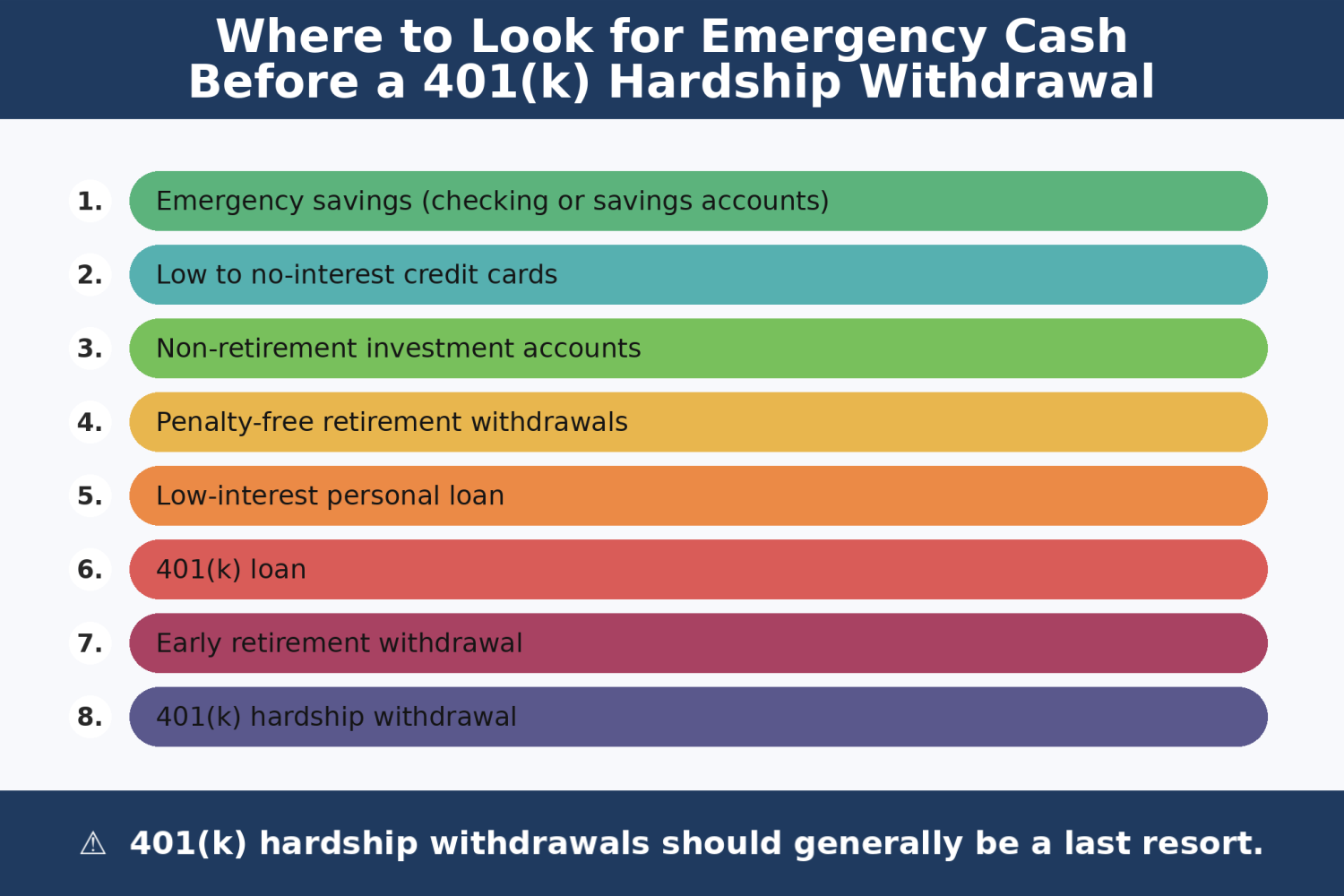
Financial experts generally recommend exploring other sources of short-term cash before turning to 401(k) hardship withdrawals.
Take advantage of your tax refund
Tax filers are seeing higher tax refund amounts compared to the previous filing year. The average refund so far for the 2025 tax year is $3,804, according to the IRS. What’s more, the IRS says that with certain deductions enacted by the Tax Cuts and Jobs Act, tax filers are realizing $775 higher than the year prior.
No matter if your refund is larger or smaller this year, use your tax refund to jumpstart your debt paydown, rather than spending it.
Consider debt consolidation
If you have several sources of debt, debt consolidation may be worth considering. Doing this allows you to combine several debts into one debt. This makes the payment cycles easier to handle and potentially saves you money in interest payments.
Also Read: 5-Point Financial Contract Trust Checklist: How to Know If a Company Is Legit
Roll over credit card debt to a balance transfer card
If you have revolving credit card balances, it’s likely that you’re paying a significant amount in interest each month. The current average credit card interest rate is roughly 21%, according to the Federal Reserve Bank of St. Louis.
If you’re currently in a cycle of credit card debt, look into a balance transfer credit card. These cards typically offer a promotional APR of 0% for a specified period of time. By doing this, you can attack the balance, rather than putting more money towards interest payments.
Consider refinancing your student loans
If you’re fighting the uphill battle of paying off student loans, there are options to refinance your loans.
However, consider that if you currently have public student loans and decide to refinance, you will lose any government protections or guarantees you have. But it may be worth it to have a better interest rate.
Final Thoughts
Financial anxiety is widespread, with more than 70% of Americans reporting worries about their finances, according to CNBC. Before you run to your retirement nest egg as a lifeline, be sure to exhaust other options.
You’ve worked hard to put away money for your post-working years. Don’t let problems today become tomorrow’s deep regret.
Also Read: Over 110 Million Americans Can’t Pay Their Credit Card Bills