
Credible Loan Refi
#1 Rated for student loan refinancing

RISLA Loan Refi
Checking rates won’t affect your credit score

Citizens Loan Refi
Rates from 3.99% to 12.37% APR
Student Loan Update: Repayment Resumes for 5 Million Borrowers in Default
Federal Student Loan Repayment Begins, Here’s What Borrowers Need To Know

Written by
Brett Holzhauer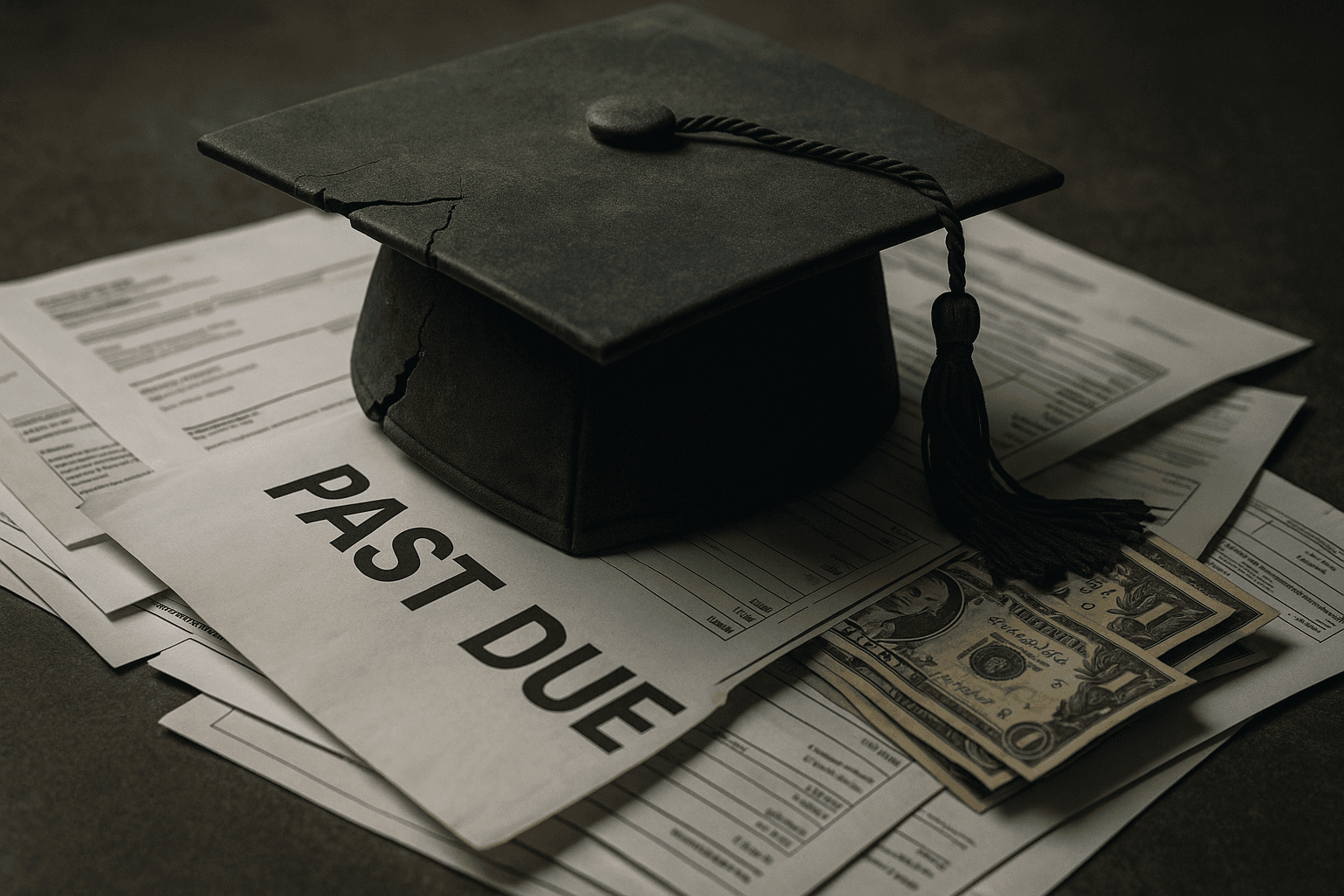
Student Loan Update
ChatGPT
After 1,879 days of pandemic-era student loan relief, borrowers in default are now forced into repayment. The Department of Education announced on May 5th that the federal government will begin collections for over five million borrowers who are more than nine months behind on their student debt. Those borrowers will now potentially see significant impact to their credit scores, wage garnishment, and tax refund withholding.
This comes after the Biden administration sought to forgive all federal student loans, but fell far short of the mark due to a flurry of legal challenges. He and his team eliminated nearly $190 billion during his term, with more than 42 million people still on the hook for $1.6 trillion.
This announcement gives borrowers a total of two weeks to prepare before more significant financial consequences may occur, including but not limited to: negative credit score impacts, wage garnishment, withholding up to 15 percent of monthly Social Security retirement and disability benefits and your paycheck.
Here’s what you need to know, and steps to take if you’re currently in default.
Student Loan Update and Its Impact
The Trump administration has made its stance clear: if you owe the government money, it’s time to repay your debts after more than five years of Covid-era delays and freezes. On Monday, May 5th, all federal student loans in default (more than nine months without payment) will be put into the Treasury Offset Program, which collects past-due debts.
For context, here are the numbers from the Department of Education on how many people this will impact:
5,000,000+: The number of borrowers that haven’t made a monthly payment in over 360 days and sit in default
4,000,000: The number of borrowers in late-stage delinquency (91-180 days)
10,000,000: Within a few months, this could be the number of borrowers in default, which would be roughly one-quarter of the total number of federal student loan borrowers
Additionally, this forces many into repayment with a lack of options for repayment assistance. Borrowers can choose to enroll in either the PAYE (Pay As You Earn) plan or Income-Contingent Repayment (ICR), but both could potentially leave financially-strapped borrowers in a pinch.
If you’re curious if either of these repayment programs could work for you, the Department of Education has a loan simulator to help understand your options.
What Borrowers Need To Do
If you’re one of the above borrowers in late-stage delinquency or default, there are a few steps to take before the May 5th restart. First, ensure that your current loan servicer has your up-to-date information. The Department of Education is proactively reaching out to point borrowers to resources like the Default Resolution Group to set up repayment plans. Without any repayment plan in place, your servicer could send your debt to collections, and larger penalties could follow.
You can also look into these additional resources for assistance:
Institute of Student Loan Advisors - A group that gives tailored guidance to borrowers
Student Debt Crisis Center - An advocacy group and resource center that holds workshops for borrowers
FSA Ombudsman - If you’re having trouble with your student loan servicer directly, consider reaching out here
Federal Student Aid FAQ - For general information, you may be able to find answers here
Consider Private Student Loan Refinancing
Private student loan lenders offer two core benefits that federal student loans don’t: clear answers and competitive rates. However, if you refinance your public student loans to private loans, you won’t be able to get those protections back.
It’s a personal choice to make, but for those who are ready to make the jump and vigorously pay down their student loans, it could be worth it.
Writer’s note: I only had private student loans and refinanced several times to pay down my student loans and save on interest payments. I detailed my journey here.
Final Thoughts
Student loans are a significant financial burden, and now those who are behind on repayment may be in a tougher financial position.

Written by
Brett Holzhauer