TrustedCompanyReviews receives commissions from affiliate partners that it reviews. The reviews, rankings, and product information of affiliates constitute advertising.

x

How We Calculate Rating

Ratings on Trusted Company Reviews are given by experts in that particular industry. Our experts monitor the brand closely and then give the brand a rating which you can trust.

Our rating score is based on 10 Points and a Five-Star shown alongside the score to easily understand the rating.

We frequently update the ratings of all brands so that you don’t choose a brand by their old  ratings.

When Should You Use a Credit Card?

Home » When Should You Use a Credit Card?

Table of Contents

When It Makes Sense to Swipe

Most people use a credit card without thinking much about it.
But, when should you use a credit card, really?

For groceries, gas, and online orders, it’s just another way to pay, right?.

Maybe — but knowing when you should use a card (and when you shouldn’t) can make a real difference. Used the right way, it can help you earn rewards, protect your purchases, and even potentially improve your credit score.

Used the wrong way, it can lead to interest charges, credit card debt, and financial stress.

Here’s how to use them to your advantage.

Key Takeaways

  • Use a credit card to earn rewards and reward points on everyday spending
  • Credit cards offer strong fraud protection compared to a debit card or cash
  • They work well for large purchases with added protections and insurance
  • Always aim to pay your balance in full to avoid interest charges
  • Avoid using a card if you might carry a balance or make only the minimum payment

The Short Answer

You should use a credit card when it adds value or protection to your purchase, and if you’re confident you can pay the balance in full at the end of the month, with very few exceptions. But, more on that later.

The best use cases include everyday spending, travel, and large purchases, where you can earn rewards, benefit from fraud protection, and avoid interest charges.

1. Use a Credit Card for Everyday Purchases

Rewards add up.

Turn Routine Spending Into Rewards

Using a credit card for everyday expenses like groceries, gas, and subscriptions allows you to earn rewards, cash back, or travel points on money you’re already spending.

Why It Matters

  • Earn beneficial reward points on everyday purchases
  • Take advantage of cards with no or low annual fees
  • Can help build a consistent credit card payment history
  • Potentially help build your credit score over time

If you’re going to spend the money anyway, this is one of the easiest ways to get something back.

Related Article: The Best Credit Cards for Gas and Groceries

2. Use a Credit Card for Safer Transactions

Stronger Fraud Protection

Credit cards typically offer better fraud protection than a debit card from your bank.
If your debit card is compromised, your bank account is immediately at risk. With a credit card, the issuer’s money is at risk, not yours. However, it’s still crucial to notify the company as soon as possible.

Easier Disputes

  • Unauthorized charges are easier to reverse
  • You can often get a temporary credit during questionable-charge investigations
  • Less immediate financial disruption

3. Use a Credit Card for Large Purchases

Built-In Protections

When making large purchases, credit cards often include:

  • Purchase protection against damage or theft
  • Extended warranties
  • Dispute support if something goes wrong

More Control Over Payments

Credit cards can give you flexibility with time payments, but this is where caution matters.
If you don’t pay the balance in full, interest rates can quickly turn a good purchase into expensive debt.

Related Article: Best Debt Consolidation Companies This Year

Is It Ever Okay to Carry a Balance?

In most cases, it’s best to pay your balance in full before the due date to avoid interest charges. But there are a few situations where carrying a balance can make sense, if you’re intentional about it.

When It Can Work in Your Favor

  • You’re using a 0% introductory APR offer on a large purchase
  • Your card offers temporary or permanent structured time payments with low or fixed costs
  • You have a clear plan to pay it off before high interest rates apply

In these cases, spreading out payments can help manage cash flow without immediately increasing costs.

What to Watch Out For

  • Promotional offers ending before you can realistically pay off the balance
  • High interest charges kicking in afterward
  • Falling into a pattern of making only the minimum payment

The key is to stay in control. Carrying a balance should be a short-term strategy, not a long-term habit that leads to debt.

4. Use a Credit Card for Travel

Earn Travel Rewards

Travel purchases are one of the best ways to earn rewards and travel points, especially for flights, hotels, and rental cars.

Built-In Travel Benefits

Many cards include:

  • Trip cancellation or interruption coverage
  • Rental car insurance
  • Lost baggage protection

These benefits can add real value, often without additional cost. However, the same guidelines about paying off the balance on time still apply.

Other Credit-Card Related Articles

Check out these other reads to learn more about managing cards and their use.

When You Should NOT Use a Credit Card

There are times when using a card can work against you.

Avoid using a card if:

  • You’re likely to carry a balance
  • You can only afford the minimum payment
  • The purchase pushes you beyond your spending limit or credit limit
  • Fees or interest outweigh the rewards

The key rule: only spend what you can afford to pay off quickly.

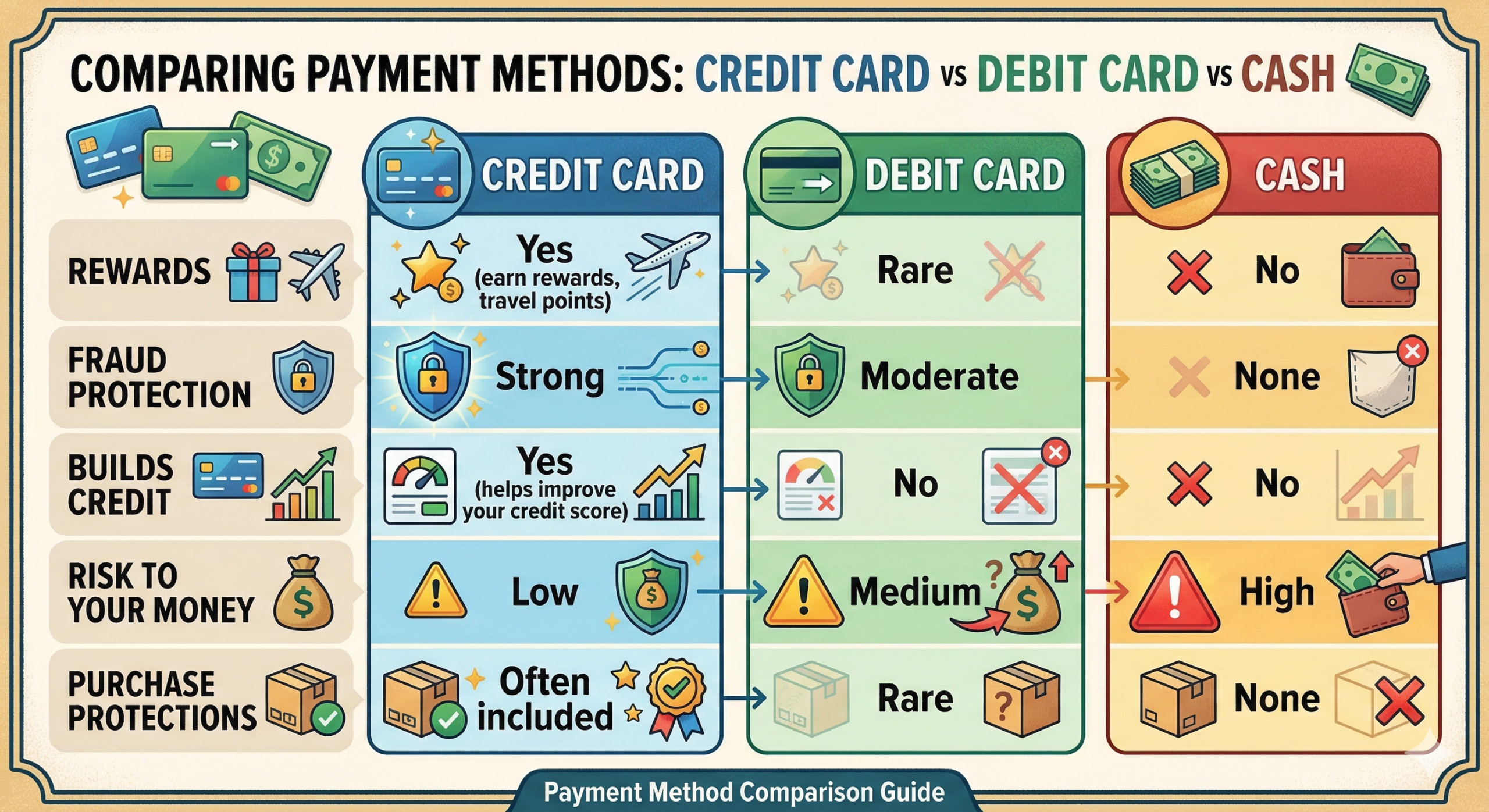
Credit card vs debit card vs cash infographic comparing rewards, protection, and credit building benefits

A simple comparison of credit cards, debit cards, and cash, highlighting rewards, protection, and credit-building benefits.

How to Use a Credit Card the Right Way

This is how the Federal Reserve Board lists its five tips for getting the most from your card use.

  • Pay on time
  • Stay below your credit limit
  • Avoid unnecessary fees
  • Pay more than the minimum payment
  • Watch for changes in the terms of your
    account

This is how you can potentially build your credit score while avoiding long-term debt.

Pro Tip

From our on-staff Certified Financial Educator

For most people, having just a few cards works best. Doing so helps avoid forgotten payments or, worse yet, forgotten charges that surprise you when the bill arrives. 

Many people carry:

  • One card for everyday spending to earn general rewards (this can be a gas or groceries card that earns specific rewards that interest you)
  • One card for specific categories or travel points (this can be a card for major purchases, travel spending, or even a daily use card if, for example, you’re saving airline miles for a planned vacation)
  • One backup card for flexibility (this is often a less-used card that’s been open for a while, has no annual fees, and helps your credit score by having a long history)

This approach helps you maximize rewards without overcomplicating things or increasing your risk of card debt.


Frequently Asked Questions

When should you use a credit card instead of a debit card?

Is it better to use a credit card for large purchases?

Conclusion

A credit card can be a powerful financial tool or an expensive mistake, depending on how you use it. Use it to earn rewards, protect your purchases, and improve your credit score. Avoid it when it leads to interest charges, missed payments, or carrying a balance.

Used with intention, a card can be more than just convenient. Using it wisely can help you get more out of the money you already spend.

About Author

Dr. Ali
Deane Biermeier is a certified financial educator through the University of Minnesota and a respected authority in financial research, writing, and editing, renowned for his in-depth analyses and expert advice. With a distinguished career that previously spanned home improvement, real estate, and finance topics, Deane's role at Trusted Company Reviews focuses exclusively on finance. Deane has contributed to leading publications such as Forbes Home, US News and World Report, Newsweek Vault, and others. Since joining TrustedCompanyReviews.com in 2023, he has solidified his reputation as a crucial resource for clear, factual financial guidance.
Dr. Ali

Deane Biermeier

Last Updated: March 20, 2026

Editorial Reviews

Must Reads

Best Egg vs LendingClub

When comparing Best Egg vs LendingClub, the difference between the two comes down to specialization versus wider product availability. Best Egg is a streamlined personal loan lender built primarily for borrowers with fair to excellent credit who want predictable loan...

Best Egg vs Upstart

Best Egg vs Upstart When comparing Best Egg vs Upstart, the key difference comes down to underwriting philosophy and borrower fit. Best Egg generally serves borrowers with fair to good credit who may be more comfortable with traditional credit evaluation. Upstart, by...

Should I Buy a Car or House First?

Should I buy a car or house first? The Short Answer: Buying a house first is usually the smarter financial move.  In most cases, buying a house before a car is the better long-term financial decision. Homes can build equity and potentially increase in value over time,...

How Much Money Should I Save Before Buying a House?

The Short Answer: How Much Money Should I Save Before Buying a House? Saving money for a home is mostly about your down payment, but it also includes closing costs and a financial cushion after you move in. Equifax (a major credit bureau) has recommended saving 25% to...

LendingTree Vs LendingClub

LendingTree Vs LendingClub LendingTree and LendingClub both provide access to personal loans, but they operate very differently. One functions as a lending marketplace, while the other is a direct lender and digital bank. Understanding that distinction is essential...

AmONE Vs LendingTree

When comparing AmONE vs LendingTree, the real question isn’t just which platform is more or less legitimate. It’s which marketplace structure better fits your needs. Both companies operate as financial product marketplaces, connecting borrowers with lenders offering...

Credible Vs LendingTree

Credible vs LendingTree, the real question is this: Do you want a streamlined personal loan marketplace, or a broader financial comparison platform with credit tools built in? While both companies let you compare multiple loan offers with only a soft credit check,...

How Does a HELOC Work?

If you’re a homeowner who needs access to funds, a Home Equity Line of Credit, or HELOC, can be a flexible option based on your home’s equity. Unlike traditional loans, it allows you to borrow only what you need over time. The Consumer Financial Protection Bureau...

Are Federal Tax Refunds Taxable?

A tax refund is the government giving you back your taxable income if you paid too much throughout the year. So federal tax refunds are not taxable; it’s yours to keep. However, there's an important exception that trips up many taxpayers, and it mainly involves state...

6 Common Budgeting Mistakes to Avoid

If budgeting feels harder than it should, you’re not alone. Many people struggle not because they lack discipline, but because they run into the same common budgeting mistakes over and over again. At Trusted Company Reviews, we review personal finance tools and...