Student Loan Default Is Rising: Nearly 10 Million Borrowers Are Affected
Borrowers Face Serious Consequences as Student Loan Defaults Rise

Written by
Brett Holzhauer
Millions of federal student loan borrowers are in default, which can lead to serious consequences including damaged credit, wage garnishment, and withheld federal tax refunds.
More than 9.5 million federal student loan borrowers are now in default—more than 270 days behind on their payments—highlighting growing financial strain among American consumers. This comes following changes made by the Trump administration to streamline repayment options, as well as the ending of Biden-era freezes on student loans.
This is an alarming situation that can result in borrowers having their wages garnished, and even tax refunds withheld.
Here’s what you need to know, and what your options are if you have student loans in default.
Why are student loan defaults rising?
Federal Student Aid reports that approximately 9 million borrowers with about $220 billion in outstanding federal student loans were in default as of March 2026. And there may be more on the way: another 2.97 million borrowers are currently delinquent, meaning they’re between 30 and 270 days behind on payments.
This spike was anticipated by many. Federal student loan payments resumed following the end of the pandemic-era pause, and overhauls in repayment policies through the One Big Beautiful Bill Act are forcing millions into repayment.
Add that to millions struggling to keep up with rising costs, and many are finding they aren’t able to make their monthly student loan payments. In a U.S. News survey, 29% say they're "not confident at all" they can repay their student loans.
Where student borrowers are struggling most
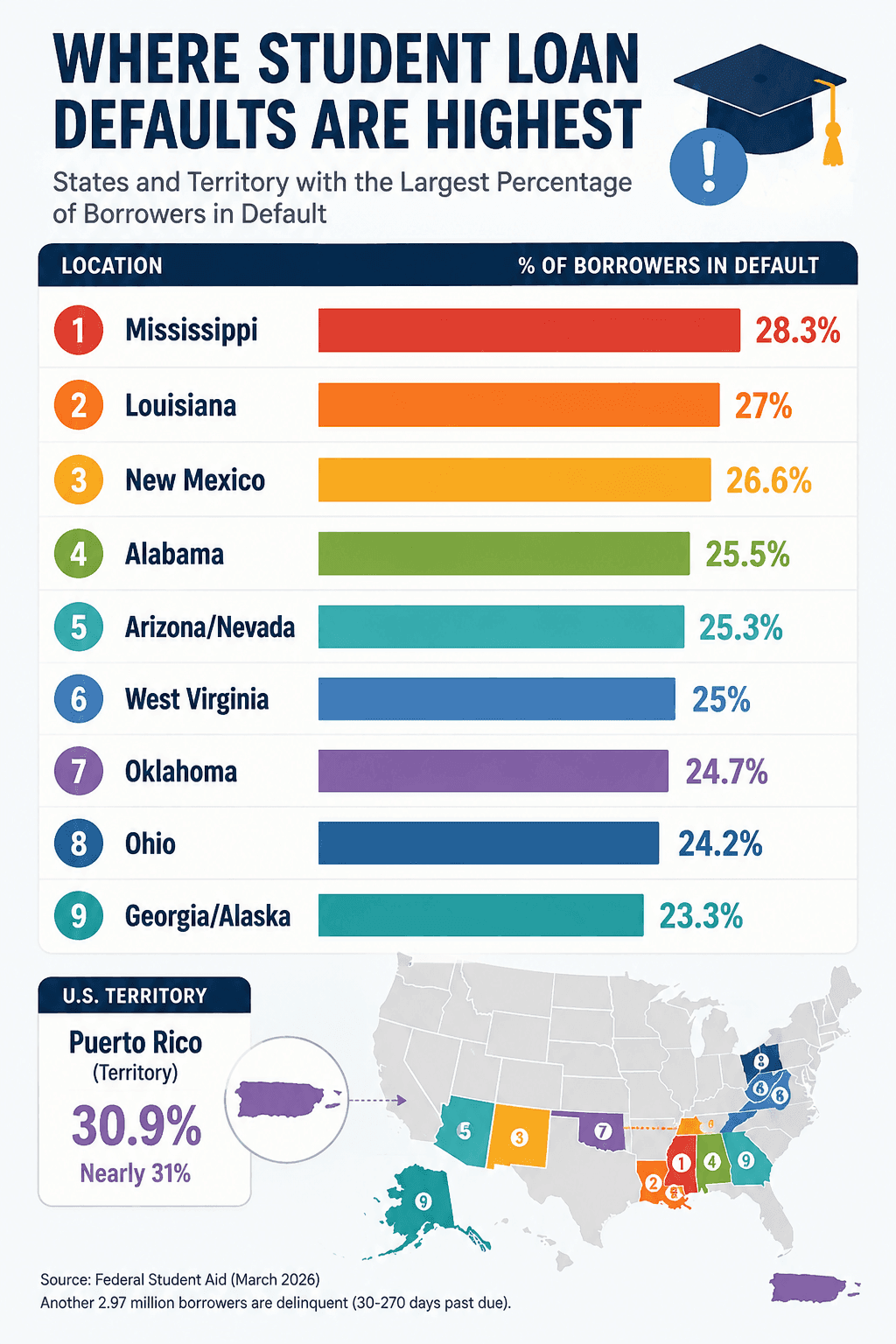
There are hot spots where more people are struggling than others. Here’s where residents with the largest percentage of people with student loans are in default, according to the Associated Press.
What happens if you default on student loans?
For most federal student loans, a borrower enters default after failing to make payments for at least 270 days. Before reaching default, borrowers are considered delinquent. Missing payments will significantly impact your credit score.
What happens if you can't pay your student loans depends on several factors. However, once a loan enters default, the consequences become significantly more severe and the federal government may:
Garnish up to 15% of disposable wages
Withhold federal tax refunds
Offset certain federal benefit payments
Add collection costs to the balance owed
Continue reporting the default to credit bureaus, making it harder to qualify for future loans or favorable interest rates
What are your options?
Being in default doesn’t mean you're out of options.
One path is loan rehabilitation, which allows borrowers to make a series of qualifying payments to remove the loan from default status. Once loans are rehabbed, it restores eligibility for federal student aid and transfers the loan to a new servicer, although involuntary collections may continue until payment requirements are met. You can find more information on loan rehab here.
If you have multiple outstanding student loans, another option is Direct Loan Consolidation. This combines eligible federal loans into one loan and can immediately remove a loan from default if program requirements are met.
Lastly, you may consider refinancing your student loans to a private loan. Keep in mind that once you refinance your loans, you will lose any potential public loan protections and benefits. However, you may be able to get a lower interest rate and streamline your payoff journey.
How to check your loan status
Borrowers can log into their account at StudentAid.gov to view their current loan status and identify their loan servicer.
If your loans have already entered default, the Department of Education's Default Resolution Group (DRG) may now manage your account and can help you explore rehabilitation, consolidation, and other repayment options.
The bottom line
Student loan default has serious financial consequences, but borrowers still have options. Acting quickly and making this part of your 2026 financial checklist can potentially stop collections, restore repayment eligibility, and prevent long-term damage to your finances.

Written by
Brett Holzhauer