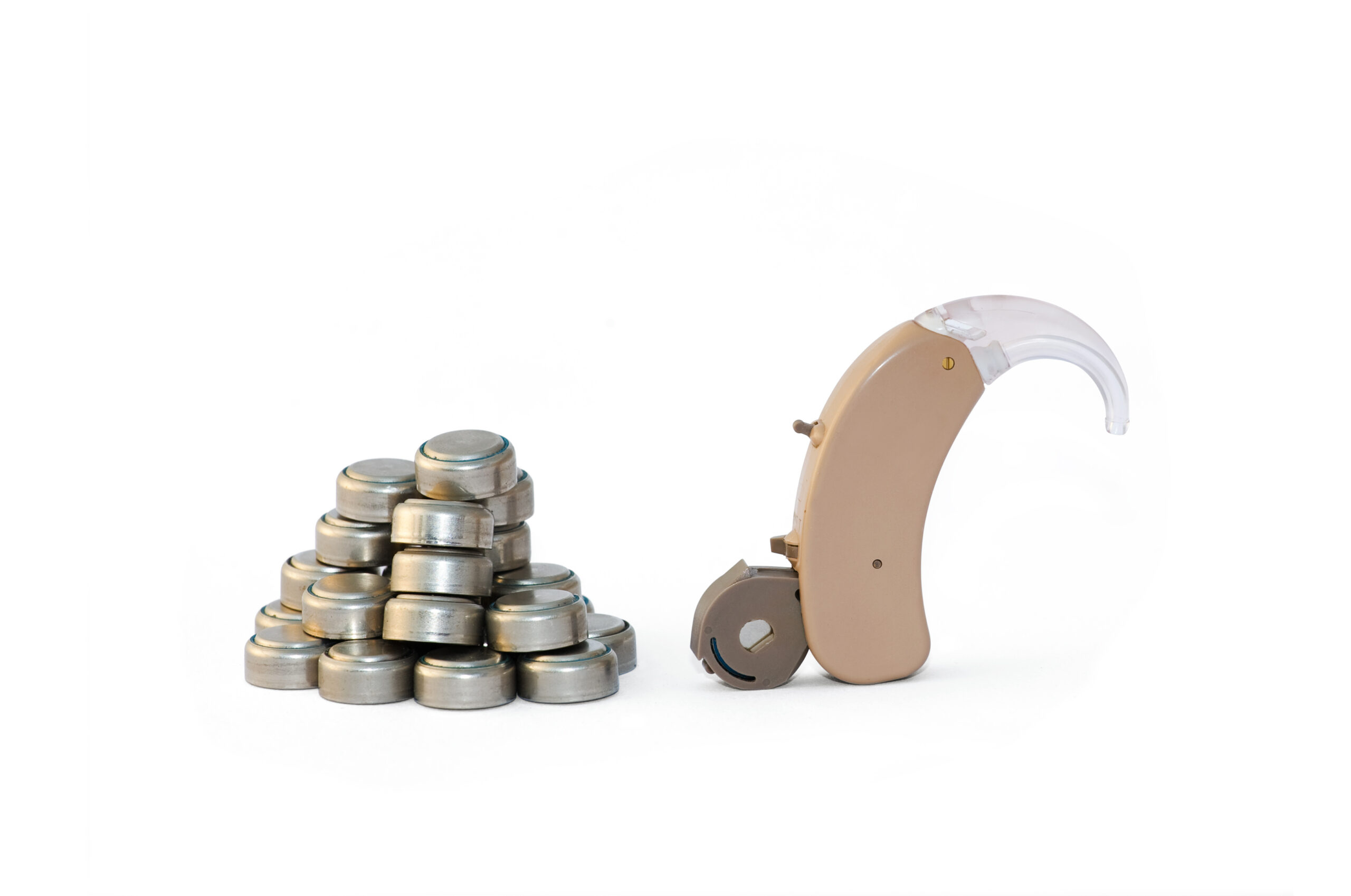
If you need to know, “How long do hearing aid batteries last?” you’ve come to the right place! After having done extensive research on the topic, we have the answer. The good news is that more than 52% of hearing aids feature rechargeable batteries, and standard batteries last longer than you probably think.
What you’ll learn:
- What are the different types of hearing aid batteries?
- How long do hearing aid batteries last?
- Which is better, standard or rechargeable batteries?
What Are Hearing Aid Batteries?
Hearing aid batteries are zinc-air power cells specially designed to fit into the small battery compartment within a hearing aid. They are sold in multi-packs at pharmacies, audiologist’s offices, and online retailers.
Because hearing aid batteries are so tiny, consider using a magnetic tool to assist you in picking up and placing the battery in the battery compartment. It’s important to note that the attached tab is not in place as a handle but must be removed to activate the battery before use. Removal of the tab exposes the zinc within the battery to the air, initiating the chemical reaction that provides the needed energy to power your hearing aid.
Hearing aid batteries are color and number-coded for easy selection. Model numbers and codes vary by brand, but colors and sizes remain consistent. Before heading to the store, confirm the battery type for your hearing aid in your hearing aid manual or packaging.
| Hearing Aid Battery Guide | |||
| Color | Size | Average Lifespan | Typical Uses |
| Yellow | 10 | 9-20 days | Power BTE* Hearing Aids |
| Orange | 13 | 3-10 days | Mini BTE* Hearing Aids, RITE* Hearing Aids, ITC* Hearing Aids |
| Brown | 312 | 6-14 days | BTE* Hearing Aids, ITE* Hearing Aids |
| Blue | 675 | 3-7 days | Mini RITE* Hearing Aids, CIC* Hearing Aids |
*Hearing aids come in many styles including, Behind-the-Ear (BTE), Receiver-in-the-Ear (RITE), In-the-Ear (ITE), In-the-Canal (ITC), and Completely-in-the-Canal (CIC).
What Kind of Hearing Aids Use Batteries?
While more than 50% of hearing aids currently on the market are rechargeable, many still use standard batteries. Types of hearing aids that use these replaceable batteries include:
- Behind-the-ear (BTE)
- Receiver-in-the-ear (RITE)
- In-the-ear (ITE)
- In-the-canal (ITC)
- Completely-in-the-canal (CIC)
When purchasing your hearing aid, always ask what kind of batteries it requires and consider the cost and time commitment of ongoing battery replacement when making your selection.
Related Articles:
How Long Do Hearing Aid Batteries Last?
Your hearing aid will require batteries of a specific size, categorized by color. Depending on the battery size, type, and hours of use per day, your battery may last anywhere from 3-20 days. Refer to our Hearing Aid Battery Guide above to determine the average lifespan of your specific battery type.
How to Make Hearing Aid Batteries Last Longer
Hearing aid battery costs can add up quickly, with some packages containing only a few cells. To save money in the long term, care for your batteries well and extend their life as long as possible. The good news? We’ve assembled several tips and tricks that will help you extend the life of your hearing aid batteries.
- Always use fresh batteries. It can be tempting to purchase giant packs of hearing aid batteries in an effort to save money and ensure constant supply. However, batteries will eventually expire. When buying your batteries, be sure that you can use all of them before they expire or purchase a smaller package.
- Store your hearing aid batteries in a dry, temperature-controlled space. Batteries stored in an area of high humidity can easily become inadvertently activated, draining them quickly. Always choose a dry area of your home that isn’t prone to moisture and avoid spaces such as your kitchen, laundry room, basement, windowsill, or bathroom.
- Use a hearing aid dehumidifier daily. Exposing your hearing aid battery to moisture is a surefire way to drain your batteries. However, as you wear your hearing aids throughout the day, moisture can accumulate. To extend the life of your batteries, remove them each evening and store your hearing aids, with the battery compartment open, in a hearing aid dehumidifier.
- Wash your hands before changing your hearing aid batteries. Dirt, oils, and moisture on your hands can quickly transfer to your hearing aid batteries, resulting in damage that shortens the battery’s life. Always wash your hands before handling your hearing aid batteries to lengthen the battery’s lifespan.
- Leave the tab in place until you’re ready to use the battery. Hearing aid batteries are zinc-air batteries. A sticky tab on top of the battery seals a tiny hole. When you remove the tab, air enters the hole, making contact with the zinc and activating the battery. Replacing the tab will not undo the activation, so always leave the tab in place until you’re sure you’re ready to use the battery.
- Wait 5 minutes before inserting the battery. Once you’ve removed the tab from the battery, wait 5 minutes before placing it in your hearing aid’s battery compartment. This gives the battery time to thoroughly activate before use and will provide you with more extended power than if you placed it immediately.
- Consider upgrading to rechargeable hearing aids. While changing your hearing aid batteries isn’t terrible, it can be challenging for those who struggle with dexterity, especially in devices small enough to fit entirely in the ear canal. It also adds an ongoing expense to your hearing aid’s cost. Rechargeable hearing aids and hearing amplifiers eliminate the need to change batteries by utilizing rechargeable internal batteries. Rather than changing the batteries, you place the hearing aids on a charging station each night and wake up to fully charged devices. While sometimes more expensive on the front end, you won’t have to purchase batteries regularly throughout the device’s life.
Are There Rechargeable Hearing Aids?
Yes, many new hearing aid models, like the Eargo line of OTC hearing aids, feature rechargeable hearing aids. A nightly rest in a charging station replaces the frequent and sometimes frustrating battery changes necessary with traditional hearing aids. Furthermore, many manufacturers provide a traveling charging case that provides additional charging time.
Many rechargeable hearing aids are packed with incredible technology and features. Discreet and sometimes nearly invisible models fit behind or entirely in the ear canal while providing outstanding sound quality. Surprisingly, they often don’t even require a prescription. Instead, manufacturers provide a hearing care professional to assist you in taking a hearing test and determining which type of hearing aid is right for your hearing loss.
How Long Does the Battery Last in Rechargeable Hearing Aids?
Rechargeable hearing aid batteries are designed to last for a full day before requiring another charge. Some devices will last a full 24 hours, while others may need to be charged after about 16.
Are Rechargeable Hearing Aids Good?
Yes, rechargeable hearing aids are good. In fact, many of the most advanced devices on the market are rechargeable. We’ve done a thorough hearing aid review and have found devices that house advanced technology, such as tinnitus support, feedback control, improved sound quality, and Bluetooth streaming, all housed in water-resistant cases that sit comfortably behind or in the ear. Furthermore, many can be purchased without a prescription, requiring only a hearing test to ensure the model is ideal.
Battery Hearing Aids Pros and Cons
Pros
- Accessibility: Batteries are readily available
- Easy to Use: Batteries are simple to change
- Low Tech: Standard batteries don’t require electrical outlets or a charging station
Cons
- Cost: Batteries must be purchased regularly
- Management: Batteries must be changed frequently
- Choking Hazard: Batteries are a choking hazard for small children and animals
- Environmental Impact: Some batteries cannot be recycled
Rechargeable Hearing Aids Pros and Cons
Pros
- Cost Efficient: No need to purchase additional batteries
- Easy to Use: No battery changes are necessary
- Environmental Impact: No disposing of batteries
Cons
- Requirements: Charging station and electrical access required
- Cost: Rechargeable devices are sometimes more expensive upfront
Hearing Aids With Batteries Vs. Rechargeable
Which is Better?
Choosing the hearing aid that is best for you is a very personal choice. With loads of available features and increasing technological advancements, there is a device for everyone. However, if you struggle with manual dexterity and believe handling tiny hearing aid batteries will be challenging, a rechargeable hearing aid may be a good fit. Rechargeable hearing aid batteries are also ideal for people who struggle to communicate and may be unable to alert caregivers to their failing battery.
On the other hand, if you like traditional hearing aids and their features and wish to continue using a standard battery style, you’ll find that the batteries are relatively affordable and easy to locate. Also, if you travel frequently and are concerned about carrying a charging station and locating electrical power, a standard battery might work best for you.
Related Article: Budgeting for Seniors – Tips and Tricks