
Buying a car is a major expense, and choosing a used vehicle can be one way to keep that cost under control. New and used car prices have risen sharply in recent years.
For buyers looking to save money and avoid the steepest years of vehicle depreciation, a used vehicle may be the best way to go. Research has identified six years old as a potential sweet spot for used vehicles. This helps you avoid significant depreciation and expensive maintenance.
Here’s what you need to know about buying a used car, how to score the best deal, and what you can do to keep your overall vehicle expenses to a minimum.
Related Article: Average Car Costs Are Near $6,000 a Year: 5 Ways to Save
Key Takeaways
- A six-year-old car may offer a good balance of value and remaining life.
- Set your total car budget before you start shopping.
- Compare financing before accepting a dealer loan.
- Avoid long loan terms that can increase your risk of owing more than the car is worth.
- Include insurance, maintenance, and other ownership costs in your budget.
Why a Six-Year-Old Used Car Could Be the Sweet Spot
For years, the three- to four-year-old car was the ideal vehicle to buy for value and longevity. A study by Bumper has the golden used vehicle at six years old. This is where the depreciation curve slows, and expensive repairs in year five are likely behind you.
While some may scoff at buying a six-year-old car, many modern cars can go the distance. Carfax and Consumer Reports both say modern vehicles can easily surpass 200,000 miles with proper maintenance. This is part of why vehicles are staying on the road longer, with the average age of vehicles at nearly 13 years old.
And if you take the average driver (~12,000 miles per year) on a six-year-old vehicle, 72,000 miles means that car still has plenty of rides left.
Car Debt Can Make a “Cheap” Used Car Expensive
Scoring a deal on a used vehicle is key to protecting your hard-earned money. An affordable monthly payment is important, but how you finance your vehicle is also a significant part of the equation.
First, interest rates on used cars vary widely based on your credit score. U.S. News currently has interest rates between 7.7% and 21.85%. Additionally, you want to stay ahead of the depreciation curve so you don’t end up “underwater.” Here’s what that means.
Let’s say you buy a six-year-old Honda Civic for $20,000, and finance it over four years. That means in four years, you could have a paid-off car that may be worth $10,000. However, if you finance it over seven years, you could reach a point where you owe more than it's worth. This is a situation you absolutely want to avoid, as it can make it difficult and expensive to sell or trade in the vehicle. If you need to get rid of the car, you may have to pay thousands of dollars out of pocket just to cover the remaining loan balance.
How to Make Used Car Financing as Cheap as Possible
So if you’re in the market for a car but need to finance it, here’s how to make it as cheap as possible:
Secure financing before shopping: Credit unions can offer competitive auto loan rates. Shop around and secure a better loan offer before heading to a car dealership.
Refinance your interest rate down: If you’re in a loan that isn’t competitive, look into refinancing your loan. You may be able to get a loan that costs you less in interest and a monthly payment that works within your budget.
Make a large down payment: Bring as much as you can for a down payment. This will reduce your monthly payment and the total interest paid over the life of the loan.
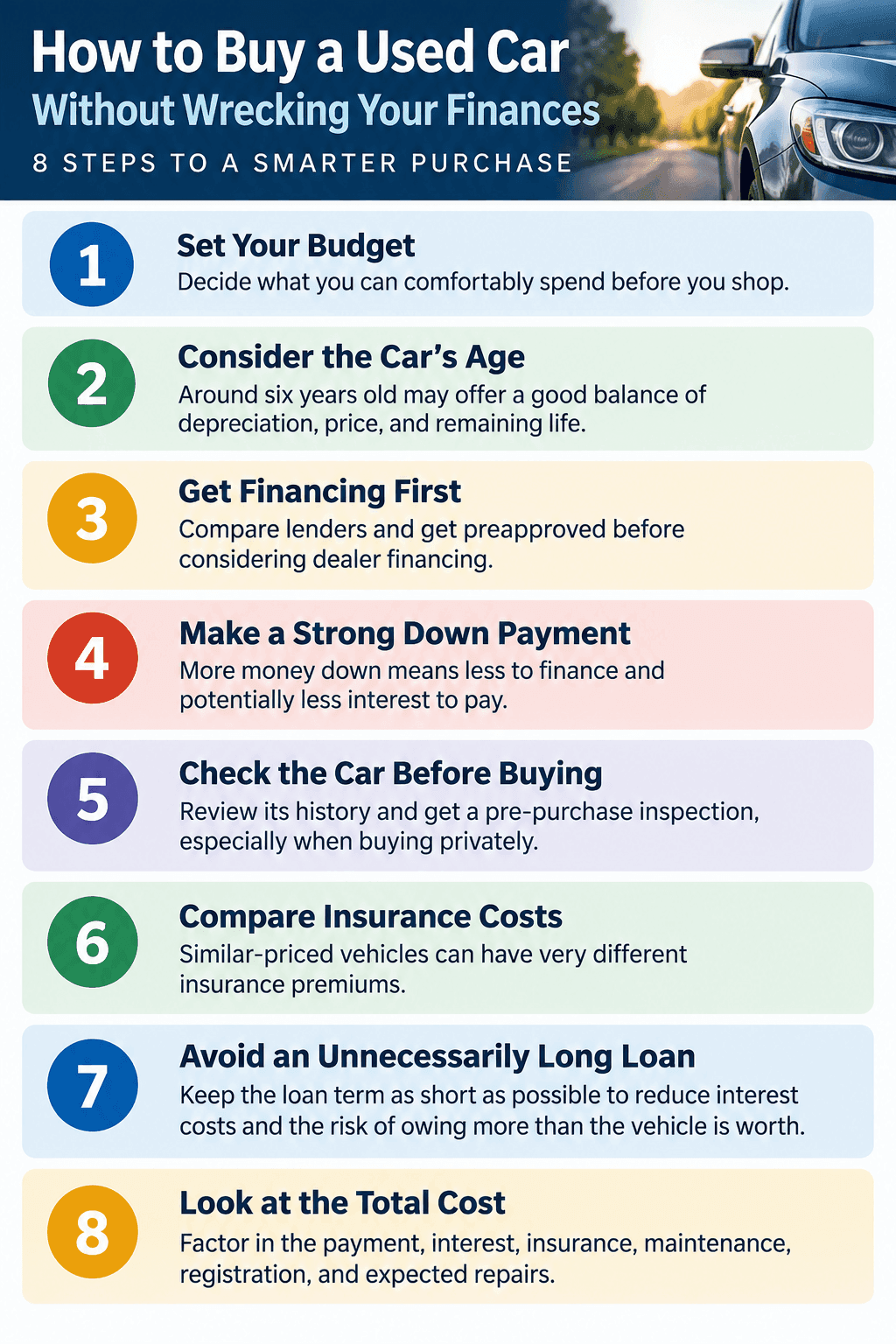
How to Buy a Used Car Without Overextending Yourself
Set your budget before shopping. Decide what you can comfortably spend before looking at cars. One rule of thumb to follow is 20/3/8. This means putting 20% down, paying it off in three years or less, and making sure the monthly payment is 8% or less of your gross income.
Shop insurance around, too. Vehicle price isn't your only ongoing expense. Insurance premiums can vary substantially depending on the vehicle you choose. Bundling your auto insurance with home coverage can also save you big.
Consider buying from a private seller. States such as Arizona, New Hampshire, and Montana allow buyers to avoid sales tax when buying a used car from a private seller. If you decide to buy from someone advertising on Facebook Marketplace, get a pre-purchase inspection, which costs anywhere from $100 to $300.
Avoid unnecessarily long loans. The 20/3/8 rule says you should pay off the loan in three years or less.
Shop your financing separately. Compare multiple lenders before accepting dealership financing.
Frequently Asked Questions
Conclusion
A used car can still be one of the best ways to lower your transportation costs, but “used” doesn't automatically mean affordable.
The six-year mark may give buyers an attractive combination of depreciation and manageable maintenance costs. But the bigger financial win comes from combining a reasonable purchase price with a manageable loan, competitive APR, and a reliable vehicle.
About Author

Brett Holzhauer
Brett’s perspective is shaped by the realities facing millennials and younger professionals: rising housing costs, student debt, shifting labor markets, and the growing gap between traditional financial advice and modern economic life.
He is particularly interested in opportunity cost, behavioral finance, and how technology is reshaping the way people save, spend, and invest.
A graduate of the Walter Cronkite School of Journalism and Mass Communications at Arizona State University, Brett brings editorial rigor, data fluency, and a strong consumer lens to every piece he publishes. In his off time, he is either traveling or watching college football.