
The answer to “What happens if I don’t pay a medical bill?” is that your bill will move through a collections and credit reporting process over time, during which you’ll have multiple opportunities to pay, dispute, or negotiate your balance.
If you have received a bill from your doctor, an imaging center, a lab, urgent care, a hospital, or other healthcare provider and you haven’t paid, you’ll first receive follow-up reminder bills. If you continue to ignore the bill, the facility may eventually transfer the account to debt collectors. The debt collection agency will then begin requesting payment and may report your balances to major credit bureaus or take legal action.
Related Article: What Happens If I Can’t Pay My Hospital Bill?
Key Takeaways
- Unpaid medical bills typically begin with reminders from the healthcare provider before being sent to collections.
- Contact the provider early to ask about financial assistance, discounts, payment plans, or other options.
- Review your medical bill and insurance EOB carefully to make sure the amount you owe is accurate.
- Medical debt sent to collections may eventually affect your credit under applicable credit reporting rules.
- In some cases, unpaid medical debt can lead to legal action, so never ignore a court summons or legal notice.
What Happens to an Unpaid Medical Bill?
While the process will vary between medical providers and states, unpaid medical bills typically follow a predictable process.
Your initial bill will follow care at your doctor’s office, specialist, lab, or other provider. Typically, the office will bill your insurance first and send you a bill for the remaining balance. This amount should match the total listed on the Explanation of Benefits (EOB) from your insurance company.
If you don’t pay or contact the billing department, they’ll send you reminders and give you ample opportunity to call and discuss the bill. Many offer financial assistance programs for those experiencing hardship, as well as discounts for self-pay patients.
If you don’t agree to a payment arrangement or clear your balance in a timely manner, the facility may transfer your debt to a collection agency, which will then begin the process of trying to collect payment.
How Long Can a Medical Bill Go Unpaid Before Collections?
There is no set timeline that determines when an unpaid medical bill goes to collections.
Most healthcare providers attempt to collect your balance directly through repeated mailed statements, phone calls, or online billing reminders. Depending on the provider, this process may continue for several weeks or months, or longer. If your health insurance claim is still being processed, the timeline may be extended to allow for payment from your plan, but your portion of the bill will be due once the insurance payment is resolved.
One thing to note is that the debt remains until it has been paid. It won’t go away on its own and, in most cases, will eventually be transferred to debt collectors. If you’re unable to pay your balance in full, contact the provider early to ask about assistance options.
What Happens When a Medical Bill Goes to Collections?
Once a medical bill goes to collections, your obligation is no longer to pay the healthcare facility directly, but to clear the debt with the collection agency. To do this, you’ll need to communicate directly with the collection agency and submit payments to it.
While your medical bill is in collections, you may still be able to negotiate the balance, arrange a payment plan, or resolve disputes. Be proactive in your approach and remember that ignoring bills and notices will not make the debt disappear.
When contacting the collection agency, ask for the total amount owed and the name of the original provider. Before making any payments, ensure that the information is correct. Then, be open to making a reasonable offer to pay off the debt at a discount.
For more information on how collection agencies work, check out our guide, “What Happens If I Don’t Pay a Collection Agency?”
Can Unpaid Medical Bills Hurt Your Credit?
Unpaid medical bills won’t immediately hurt your credit score, but they can have an impact over time.
If you have an unpaid medical bill with a healthcare facility, it’s unlikely that it’s been reported to the credit bureaus. However, once the facility passes the debt to a collections agency, you could see the debt show up on your credit report within a year if you haven’t been making efforts to pay.
Credit reporting rules change frequently, but currently allow agencies to report debts over $500 and those that have remained in collections for up to 1 year. If you’re concerned about how your medical debts affect your credit score, be sure to check current rules and regulations at the Consumer Financial Protection Bureau concerning reporting, and contact collection agencies to make payment arrangements.
What Should You Do If You Have an Unpaid Medical Bill?
If you’re unable to pay a medical bill, taking action early usually provides the greatest number of options.
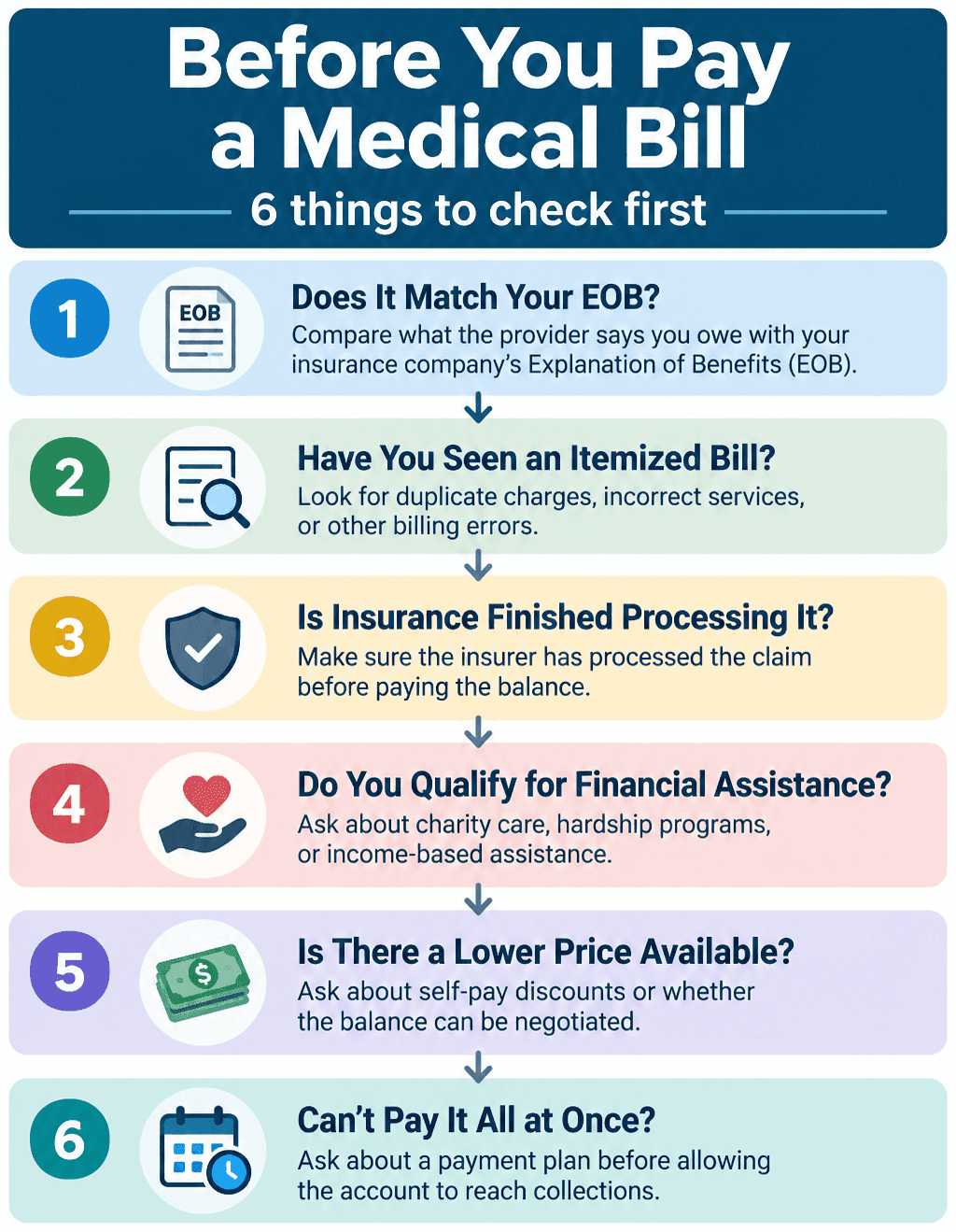
Review the bill carefully. Compare it with your insurance explanation of benefits to confirm that the charges are correct.
Request an itemized bill. This can help identify duplicate charges, coding errors, or services you didn’t receive.
Contact the provider’s billing department. Many offices are willing to discuss payment options before the account becomes seriously delinquent.
Ask about financial assistance. Some providers offer hardship programs, charity care, or income-based assistance for eligible patients.
Request a payment plan or negotiate the balance. Depending on your circumstances, the provider may offer reduced settlements, self-pay discounts, or monthly payments.
If the debt is already in collections, verify it first. Confirm that the amount is accurate before agreeing to payment.
Addressing the bill promptly often results in more flexibility than waiting until collection activity begins.
If you need additional financing after exploring these options, our guide to the Best Personal Loans explains what to consider before borrowing.
Can You Be Sued for Not Paying a Medical Bill?
Yes, it’s possible to be sued for not paying a medical bill, but not all unpaid medical bills result in a lawsuit.
In some situations, a healthcare provider or collection agency may choose to pursue legal action to recover the debt that you owe. Whether that happens depends on factors such as the total balance owed, the provider’s collection policies, and applicable state laws.
Collection practices and statutes of limitations vary significantly from one state to another.
If you receive a court summons or legal notice, never ignore it. Respond promptly and seek qualified legal assistance to help you better understand your rights and available options.
Additional Debt and Financial Resources
Medical debt can overlap with other financial challenges, especially when an unexpected expense makes it harder to keep up with other bills. These resources can help you understand what may happen when you fall behind, your options for dealing with debt, and ways to strengthen your finances.
Medical Bills and Debt
What Happens If I Can’t Pay My Hospital Bill? Learn what can happen to an unpaid hospital bill and how financial assistance, payment plans, and negotiation may help.
Can Credit Cards or Personal Loans Help Pay Off Medical Debt? Compare borrowing options for medical expenses and the potential risks of moving medical debt onto other forms of credit.
Collections, Lawsuits, and Judgments
What Happens If I Don’t Pay a Collections Agency? Learn what can happen when a debt reaches collections and what options you may have.
Can a Credit Card Company Sue You? Find out when unpaid credit card debt can lead to a lawsuit and what happens if you're sued.
Which Credit Card Companies Sue the Most Over Unpaid Debt? Learn what influences a creditor's decision to sue and which companies have historically pursued collection lawsuits.
What Happens If I Can’t Pay a Judgment? Understand what can happen when you can't afford to pay a court judgment and what steps may come next.
When You Can’t Pay Other Bills
What Happens If I Can’t Pay My Credit Card? Learn what happens after missed credit card payments and what you can do before the debt escalates.
What Happens If I Can’t Pay My Mortgage? Your Options and Next Steps: Understand mortgage delinquency, foreclosure risk, and options for homeowners struggling with payments.
What Happens If You Can’t Pay Your Student Loans? Learn what can happen after missed student loan payments and which repayment options may be available.
How Late Can You Be on a Car Payment Before You Lose Your Car? Learn what happens after a missed auto loan payment and when repossession may become a risk.
Late Car Insurance Payment? What Happens and How to Avoid Cancellation. Find out what can happen after a late insurance payment and how to reduce the risk of a coverage lapse.
Managing Debt and Borrowing
Best Debt Consolidation Companies: Compare leading debt consolidation companies and options for combining multiple debts into a more manageable repayment plan.
Debt Consolidation Loans for Bad Credit: What You Need to Know. Explore consolidation options when poor credit makes qualifying for financing more difficult.
9 Real-Life Factors to Consider When Borrowing Money: Consider the practical costs and consequences before taking on a new loan.
When Should You Use a Credit Card? Learn when using a credit card may make financial sense and when another payment method may be better.
When Should I Refinance – Anything? Learn when refinancing debt may lower costs or improve your repayment terms.
How to Find Extra Money in Your Budget: Look for ways to free up money in your monthly budget that could be redirected toward bills or debt.
Frequently Asked Questions
Conclusion
If you’re stressed and wondering what happens if you can’t pay your medical bill, stay calm and remember that you do have options. While an unpaid medical bill can eventually lead to collections and other financial consequences, those outcomes usually take time.
Now is the time to be proactive. Before the debt progresses further, review the charges carefully, communicate openly with the billing provider, and explore payment plans or financial assistance programs. Taking action early often creates more opportunities to resolve the balance than simply ignoring the bill and will eliminate the stress of an unpaid bill.
About Author

Tammy McKinney
Tammy McKinney, RN, is a seasoned registered nurse and accomplished healthcare and personal finance writer. With a background in acute care, long-term care, and hospice & palliative care, Tammy combines her medical expertise with her passion for writing to educate and inform the public on various health and finance-related topics.