
Car insurance costs about $70 per month for state-minimum coverage, which generally includes liability insurance, or $200 per month for full coverage, based on rounded averages from national rate studies. Adding common options can raise the full-coverage cost to about $210 to $215 per month.
However, your actual cost could be much lower or higher than average, depending on numerous variables. Your location, driving history, vehicle, discounts, and even your credit score in states that allow it will also influence your premium.
For example, a 12-year-old car may cost considerably less to insure for full coverage than a newer vehicle, assuming similar driver characteristics and coverage limits. Additionally, bundling your home and auto coverage and taking advantage of provider discounts may substantially lower your premium.
Key Takeaways
- Car insurance costs approximately $70 per month for state-minimum coverage and $200 for full coverage.
- Your location, vehicle, driving history, coverage choices, and available discounts influence your premium.
- Bundling home and auto insurance may reduce premiums by 10% to 25%, depending on the provider.
- State-minimum insurance may leave you financially vulnerable after an accident. Compare quotes, coverage limits, and deductibles before choosing a policy.
How Much Does Car Insurance Cost Per Month?
The amount you pay for car insurance depends partly on the coverage you choose and the discounts you qualify for. The following estimates illustrate how different policy options can affect your monthly premium.
Type of car insurance | Estimated monthly cost* |
State-minimum required coverage | $70 |
Full coverage | $200 |
Full coverage plus common add-ons | $210–$215 |
Full coverage with a qualifying bundling discount | $150–$180 |
*The first two figures are rounded averages from multiple rate studies. Add-on and bundling figures are illustrative estimates. The bundling example assumes a 10% to 25% discount applies to the auto premium, which isn't always the case.
How Much Is Liability Insurance vs. Full Coverage?
Liability insurance generally costs less than full coverage because it only pays for covered injuries and property damage you cause to others, not damage to your own vehicle.
Full coverage typically includes liability, collision, and comprehensive insurance. Collision covers damage to your vehicle from crashes, while comprehensive covers events such as theft, hail, and vandalism.
Most states require liability insurance or another form of financial responsibility, while collision and comprehensive coverage are generally optional under state law. However, if you finance or lease your vehicle, your lender or leasing company typically requires collision and comprehensive coverage.
Higher liability limits increase protection but may raise premiums. Choosing a higher collision or comprehensive deductible can reduce monthly costs.
Minimum car insurance requirements vary by state, and most states require bodily injury and property damage liability coverage. Some also require your policy to include personal injury protection (PIP) and uninsured or underinsured motorist coverage.
These additional requirements can increase the cost of a state-minimum policy. However, even with these protections, you could be personally responsible for damages that exceed your liability limits.
Pro Tip Don't guess about what your car insurance covers. The California Department of Insurance advises, "Call your agent, broker, or insurance company if you do not understand something in your policy." Understanding your coverage limits, exclusions, and deductibles before an accident can help you avoid costly surprises. |
Is Full Coverage Worth It for an Older Car?
Full coverage may become less worthwhile as your vehicle ages and loses value. For example, if your car is worth $4,000, paying several hundred dollars annually for collision coverage might not make financial sense if you can afford to replace or repair it.
However, dropping coverage could leave you responsible for significant repair or replacement expenses.
The California Department of Insurance's automobile insurance guide cited earlier recommends considering whether collision and comprehensive coverage are necessary on older vehicles. Compare the actual premium savings, deductible, and vehicle value before making changes.
What Affects the Cost of Car Insurance Per Month?
Insurance companies consider numerous factors when calculating your premium. Some, such as driving history and coverage selections, are within your control. Others depend on where you live or the vehicle you drive.
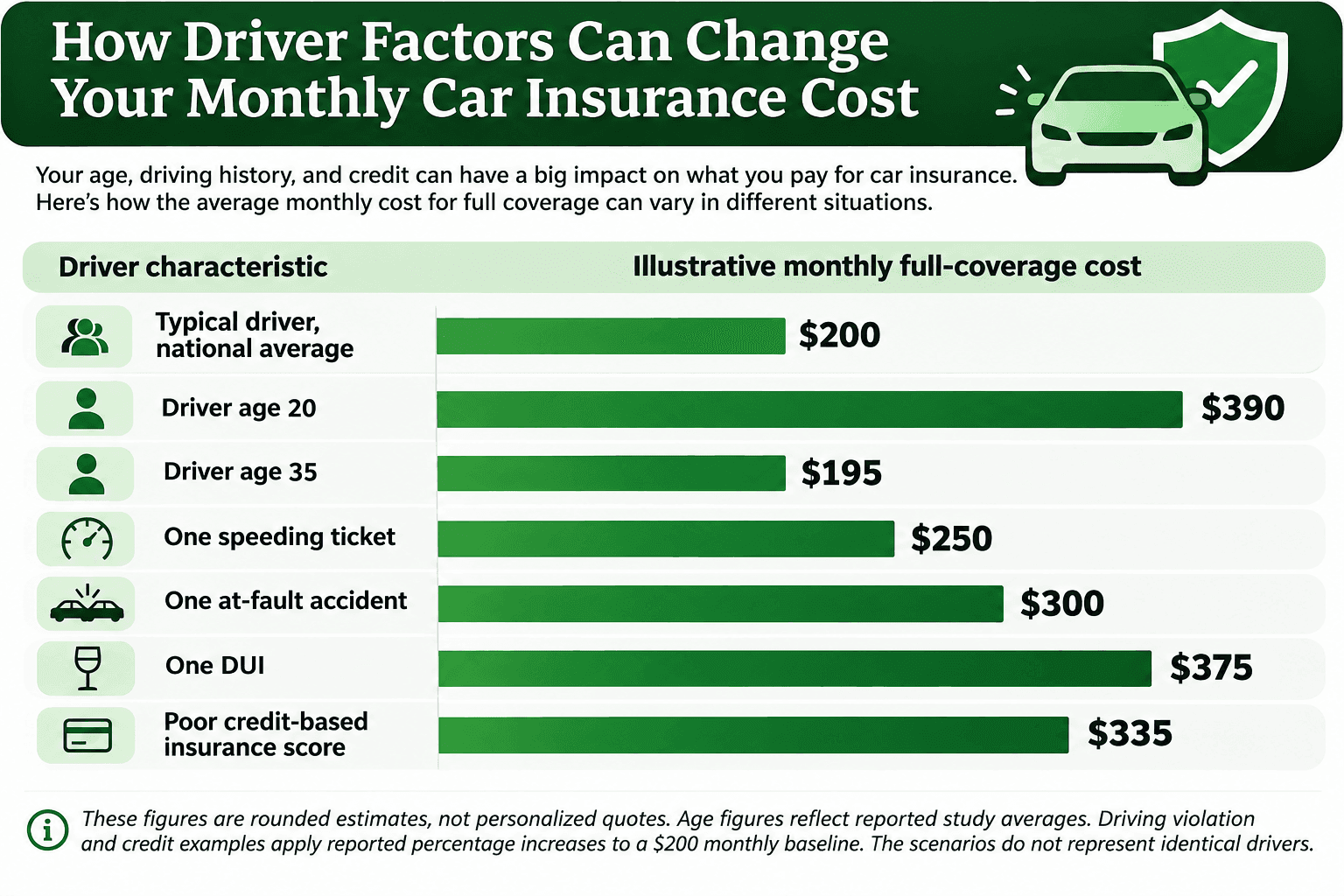
Age and driving experience: Younger drivers generally pay more because they have less driving experience.
Driving history: Speeding tickets, at-fault accidents, and DUIs can significantly increase premiums. Serious violations can affect rates for several years.
Credit-based insurance information: Insurers in many states use credit-based insurance scores when determining premiums. Poor credit-based insurance scores can increase costs, although some states restrict or prohibit this practice.
Vehicle type and age: New cars, expensive and luxury vehicles, cars with costly replacement parts, and models with high theft rates generally cost more to insure. Older vehicles often cost less for collision and comprehensive coverage because their market value tends to decrease over time.
Location: State insurance requirements plus your area's accident frequency, theft, weather risks, and local repair costs can all play a role and influence your premium.
Coverage and discounts: High liability limits, low deductibles, and additional protections tend to increase the cost of an auto policy, while bundling, safe-driver programs, and low-mileage discounts may reduce it.
How Much Do Car Insurance Add-Ons Cost Per Month?
Optional auto insurance add-ons can add useful features to your policy without substantially increasing your premium. Availability and specifics vary among providers, so their value to you will depend on your vehicle and circumstances.
Optional coverage | Approximate additional monthly cost |
Roadside assistance | $3 |
Rental reimbursement | $2–$7 |
Gap insurance | $7 |
Roadside assistance helps with towing, jump-starts, and other roadside emergencies.
Rental reimbursement pays toward a rental vehicle while yours undergoes repairs following a covered claim.
Gap insurance can help pay the difference between your vehicle's value and the remaining loan or lease balance after a covered total loss. It's generally unnecessary if you own your vehicle outright.
Where to Find Affordable Car Insurance and Bundling Discounts
Because insurers calculate risk differently, finding an affordable policy starts with comparing quotes from multiple providers and asking questions. Premiums can vary significantly between providers for the same driver and vehicle. Some companies allow customers to combine certain discounts with safe-driving or low-mileage programs for additional savings. For example, bundling your auto insurance with homeowners or renters insurance may also reduce your combined premiums by approximately 10% to 25%.
Our Best Auto Insurance Companies and Best Home and Car Insurance Bundles guides compare leading providers based on pricing, coverage, customer satisfaction, discounts, and overall value.
Insurance company | Why consider it? | Reported bundling savings |
Competitive premiums and broad coverage | Up to 13% | |
Affordable rates and digital convenience | Varies | |
Safe-driver and low-mileage discounts | Up to 15% | |
Local agents and bundling opportunities | Approximately 20% average | |
Flexible shopping tools and discounts | Varies | |
Customer satisfaction and dividend options | Varies | |
Customizable policies and bundling | Up to 20% | |
Stackable discounts and bundling opportunities | Up to 25% |
Bundling discounts apply to qualifying policies and may affect home and auto premiums differently. "Varies" indicates that a comparable discount figure wasn't established in our supplied research.
However, it's important to remember that bundling isn't automatically the cheapest option. One insurer might offer inexpensive auto coverage but charge considerably more for homeowners insurance. Another might offer lower standalone auto premiums that outweigh a competitor's bundling discount. Property location, claims history, coverage limits, and eligibility for other discounts also affect the comparison.
Compare quotes using identical coverage limits and deductibles, and evaluate the total cost of both policies rather than focusing only on the advertised discount.
How to Lower Your Monthly Car Insurance Payment
Even if your premium is already competitive, it may be worth evaluating your coverages and provider from time to time. Experts recommend reviewing your insurance once a year or when significant life changes happen. Here are several strategies that may help reduce your monthly car insurance costs.
Compare multiple quotes. Shopping around can reveal substantial differences between insurers offering similar coverage. Be sure to compare based on critical factors, including costs, coverages, and exclusions (things your policy doesn't cover).
Bundle insurance policies. When applicable, combining your home or renters insurance with auto coverage may qualify you for multi-policy discounts.
Ask about additional discounts. Safe-driving programs, low annual mileage, defensive driving courses, and vehicle safety equipment may reduce premiums.
Consider a higher deductible. Choosing a high deductible on your collision or comprehensive coverages generally lowers your premium, but keep in mind that you'll pay more out of pocket after a covered claim.
Review coverage on older vehicles. Removing unnecessary optional coverage can reduce the cost of your policy. However, be sure you can comfortably handle the financial risk.
Compare payment options. Paying a six-month policy in full may eliminate installment fees or qualify you for a discount.
Note: Tread carefully when considering reducing liability limits as a way to save money. Inadequate protection could leave you responsible for substantial expenses after an accident.
Frequently Asked Questions
Conclusion
Car insurance costs approximately $70 per month for state-minimum coverage and $200 for full coverage, but individual premiums can vary significantly. Factors such as your vehicle's age and model, location, driving history, coverage selections, available discounts, and, in some states, your credit score can all influence how much you pay.
Compare providers using our Best Auto Insurance Companies guide, and explore our Best Home and Car Insurance Bundles comparison to find additional savings opportunities without sacrificing the protection you need.
About Author

Deane Biermeier - Certified Financial Educator
Deane Biermeier is a certified financial educator through the University of Minnesota and a respected authority in financial research, writing, and editing, renowned for his in-depth analyses and expert advice. With a distinguished career that previously spanned home improvement, real estate, and finance topics, Deane's role at Trusted Company Reviews focuses exclusively on finance. Deane has contributed to leading publications such as Forbes Home, US News and World Report, Newsweek Vault, and others. Since joining TrustedCompanyReviews.com in 2023, he has solidified his reputation as a crucial resource for clear, factual financial guidance.