
Brett Holzhauer is a senior financial writer and editor with over a decade of experience covering personal finance, investing, and the U.S. economy. His work has been featured in Forbes and CNBC, where he focuses on helping readers make sense of real-world financial challenges.
Falling behind on a credit card can lead to late fees, credit damage, and collection calls. In some cases, it can also land you in court.
Credit card companies and debt collectors file millions of lawsuits against consumers every year, and the rate is rising. But your chances of being sued can depend on who you owe, how much you owe, where you live, and how the creditor handles delinquent accounts.
Here’s what to know about credit card lawsuits and what to do if you receive one.
Key Takeaways
- Credit card companies and debt collectors can sue over unpaid credit card debt.
- There is no specific debt amount or number of missed payments that automatically triggers a lawsuit.
- Ignoring a lawsuit can result in a default judgment against you.
- Contacting your creditor early may help you avoid collections or legal action.
- If you're sued, respond by the deadline and consider getting legal help.
Which credit card companies sue the most?
Several years ago, a ProPublica investigation found that Capital One stood out for the volume of collection lawsuits it filed. Discover ranked second, while American Express filed comparatively fewer lawsuits at the time.
No single credit card company pursues litigation against past-due cardholders more than another. It comes down to each case and whether it’s worth the card issuer pursuing it.
Moreover, the lawsuit may not come from the credit card issuer itself. They may sell the debt to a collection agency, which can then take on the litigation. Major debt buyers such as Midland Funding, Portfolio Recovery Associates and LVNV Funding consequently appear frequently in court records alongside banks.
When will a credit card company sue you?
There’s no specific balance or number of missed payments that will trigger a lawsuit. Creditors consider factors such as your balance, how long the debt has gone unpaid, their internal collection policies, and whether previous collection attempts have worked before pursuing litigation.
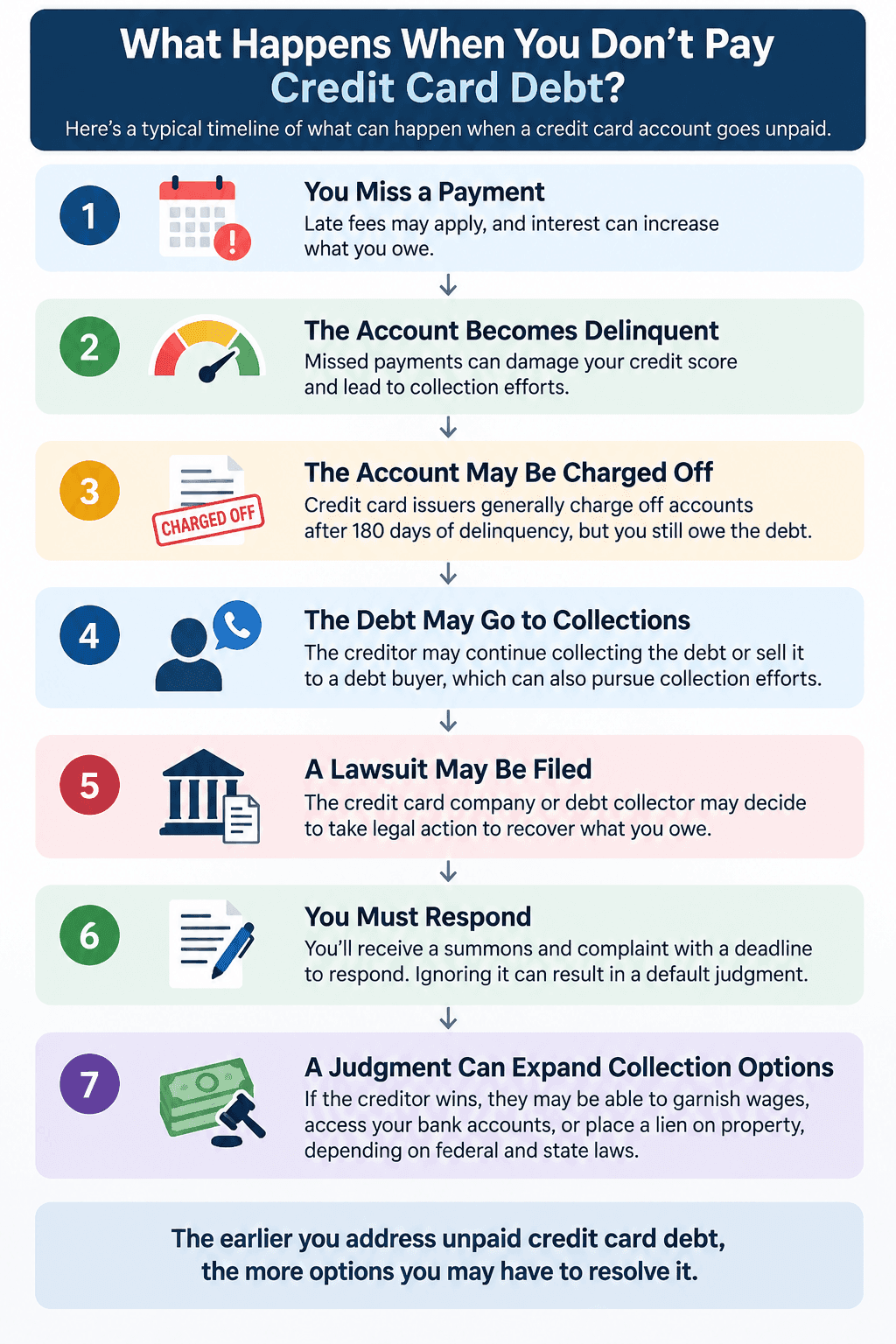
Credit card issuers generally must charge off accounts once they’re more than 180 days delinquent. But a charge-off doesn't erase the debt or prevent further collection efforts.
In addition, the statute of limitations varies by state and type of debt.
What happens when a credit card company sues you?
You’ll generally receive a summons and complaint explaining who’s suing, what they claim you owe, and how long you have to respond.
Do not ignore these documents. The Consumer Financial Protection Bureau says failing to respond can result in a default judgment, meaning the creditor may win without you presenting your side of the case.
A judgment gives creditors additional collection options. Depending on federal and state protections, that can include garnishing wages, taking money from a bank account, or placing a lien on property.
Related Article: How to Get Out of Debt: How I Paid Off $44,000
What should you do if you're sued?
If a credit card company or debt collector sues you, acting quickly can help protect your options.
Don’t ignore the lawsuit: Read the summons and complaint carefully and note the deadline to respond. Failing to respond can lead to a default judgment, which may allow the creditor or debt collector to win the case without you presenting your side.
Verify the debt and amount: Make sure the debt belongs to you and that the amount being claimed is accurate. Review your records for payments, fees, or other discrepancies, and keep copies of any documents related to the account.
Consider negotiating or settling: A lawsuit doesn’t necessarily eliminate the possibility of reaching an agreement. You may be able to negotiate a settlement or payment plan with the creditor or debt collector. Get any agreement in writing before making a payment.
Seek legal help when necessary: If you’re unsure how to respond or believe the lawsuit is incorrect, consider speaking with a consumer-law attorney or legal aid organization. An attorney can help you understand your rights, possible defenses, and the consequences of a judgment in your state.
How to avoid a credit card lawsuit
The earlier you address unpaid credit card debt, the more options you may have to resolve it before it reaches court.
Contact the issuer early: If you know you’re going to miss a payment, contact your credit card company as soon as possible. You don’t necessarily need to be behind already to ask what options are available.
Ask about hardship programs: Some credit card companies offer hardship or loss-mitigation programs for customers struggling to make payments. You may be able to get assistance in the form of lower payments, reduced interest rates, or other temporary relief.
Consider a payment plan or settlement: If you’ve already fallen behind, you may be able to negotiate a repayment plan or settle the debt for less than the full balance. Make sure you understand the terms and get any agreement you make with the card issuer in writing.
Prioritize delinquent debt: The longer an account remains unpaid, the greater the risk that it could be sent to collections or result in a lawsuit. If you’re juggling multiple debts, consider debt consolidation to get your debts under control.
Frequently Asked Questions
Conclusion
Credit card debt doesn’t automatically lead to a lawsuit. However, creditors and debt collectors may eventually decide that taking legal action is the best way to recover what they’re owed.
If you’re struggling with payments, contacting your issuer early may give you more options, including hardship assistance or a payment plan. If you do receive a lawsuit, don’t ignore it. Respond by the deadline, verify the debt, and consider seeking legal help to understand your rights and next steps.
About Author

Brett Holzhauer
Brett’s perspective is shaped by the realities facing millennials and younger professionals: rising housing costs, student debt, shifting labor markets, and the growing gap between traditional financial advice and modern economic life.
He is particularly interested in opportunity cost, behavioral finance, and how technology is reshaping the way people save, spend, and invest.
A graduate of the Walter Cronkite School of Journalism and Mass Communications at Arizona State University, Brett brings editorial rigor, data fluency, and a strong consumer lens to every piece he publishes. In his off time, he is either traveling or watching college football.