
Key Takeaways
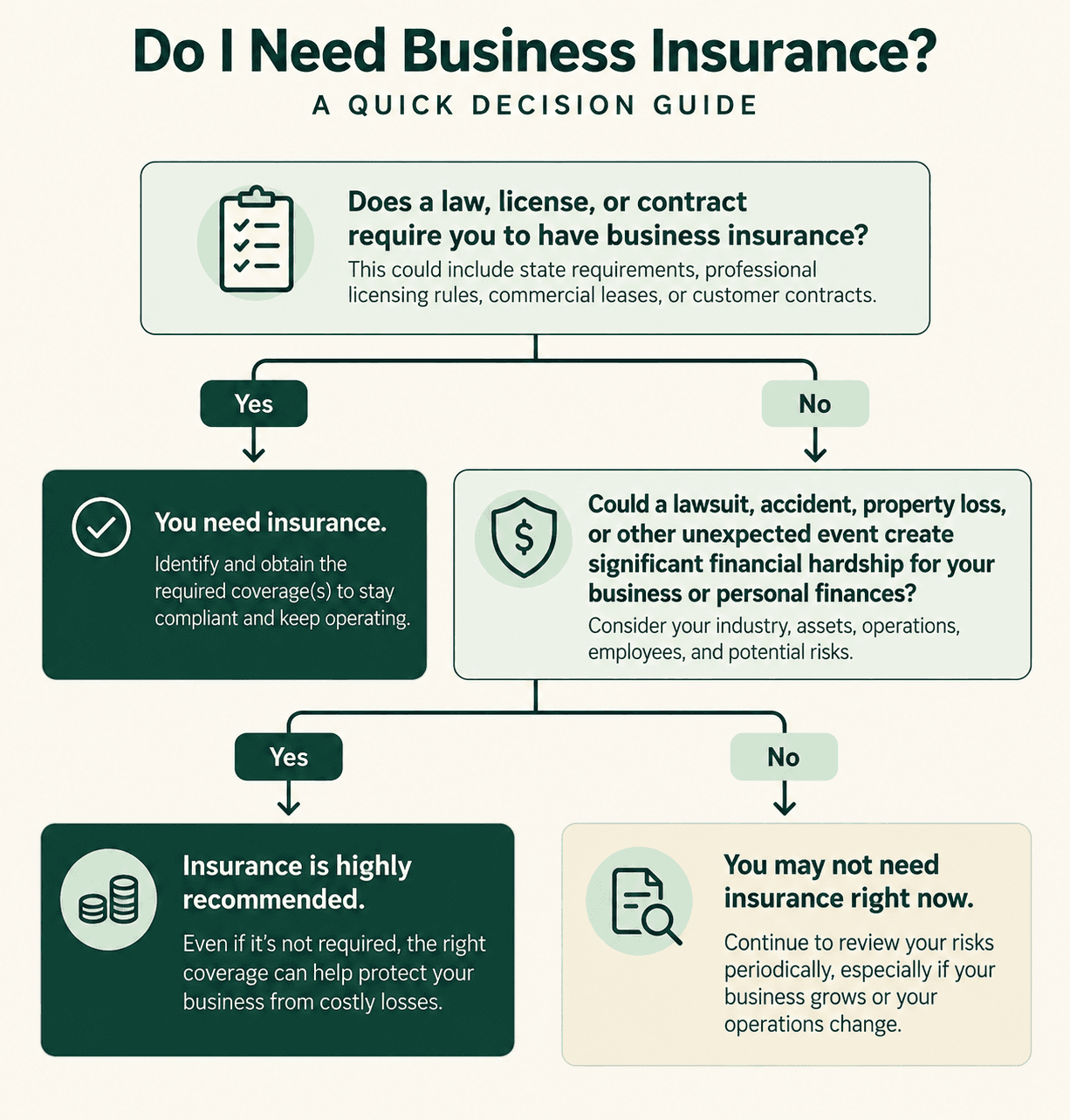
- Business insurance may be legally required depending on your state, industry, and business activities.
- Even when optional, insurance can protect against costly lawsuits, property damage, and financial losses.
- The coverage you need depends on your business's risks, assets, and employees.
- Compare coverage limits, exclusions, deductibles, and premiums before choosing a policy.
Do I need business insurance?
If you operate a business, you may be legally required to carry certain insurance coverage, especially if you have employees, operate business vehicles, or work in a regulated profession. However, even when insurance isn't mandatory, having the right coverage can help protect your business from lawsuits, property damage, and other expensive losses.
The right coverage for you and your business depends on your business activities, location, and financial risks. Understanding those factors can help you avoid unnecessary insurance expenses and potentially costly gaps in coverage.
Finding the right insurance provider and coverage is the next challenge. But before comparing providers, let's explore when business insurance is required, when it's worth considering, and which types of coverage may make sense for your business.
Is Business Insurance Required by Law?
Business insurance isn't universally required in the United States. However, state laws, licensing requirements, and business activities can make certain protections mandatory. For example, in order to maintain a contractor's license and operate a contracting company, some states require proof of ongoing business liability and workers' compensation coverage.
Common requirements include:
Workers' compensation: Required for many businesses with employees, depending on state laws and exemptions.
Commercial auto insurance: Generally required for business-owned vehicles and may also be necessary when personal vehicles are used for business purposes, depending on state laws and how the vehicles are used.
Professional liability: May be required for certain licensed professions.
Unemployment insurance: Employers generally must participate in applicable state unemployment insurance programs.
Disability insurance: Required for qualifying employers in certain states.
Insurance requirements can also come from contracts. Landlords, lenders, and clients may require coverage before doing business with you.
Businesses that perform work in customers' homes, such as remodelers, repair contractors, and cleaning services, may also be required to carry general liability insurance under state or local licensing rules. Even when coverage isn't legally required, homeowners may request proof of insurance before allowing work to begin.
Philip Farina is a risk management professional with more than 30 years of experience and the Chief Advisor at Risky Business. He explains: "One rule of thumb is if the business must have a professional license to operate or if the business engages in providing services or products to municipal, school or government agencies, then insurance is often required." |
Check with your state's insurance department, licensing authority, and employment agencies to determine your obligations.
What Insurance Do I Need for My Business?
Most small businesses should evaluate general liability insurance first, then consider additional coverage based on their employees, assets, operations, and financial risks.
Insurance Type | What It Protects | Who Should Consider It |
General liability | Third-party injury and property damage claims | Most businesses |
Workers' compensation | Employee work-related injuries and illnesses | Businesses with employees |
Commercial property | Buildings, equipment, inventory, and other covered property | Businesses with physical assets |
Professional liability | Claims involving professional mistakes or negligence | Consultants and service providers |
Commercial auto | Accidents involving covered business vehicles | Businesses using vehicles for work |
Cyber insurance | Certain data breaches and cyber-related losses | Businesses handling sensitive information |
Business interruption | Lost income and certain expenses after covered disruptions | Businesses dependent on ongoing operations |
Not every business needs every policy. Focus on risks that could cause losses your business couldn't comfortably absorb.
General Liability Insurance
General liability insurance helps protect against covered claims involving bodily injury, property damage, and certain advertising injuries, such as copyright infringement, libel, or slander in your business's advertising.
An example of a liability situation might be if a customer slips and falls inside your store, in which case general liability coverage may help pay medical expenses, legal costs, or a settlement.
Workers' Compensation Insurance
Workers' compensation helps cover medical expenses and lost wages for employees who experience work-related injuries or illnesses.
Most states require employers to carry coverage. However, exemptions vary by state, and employee-count thresholds can matter.
Professional Liability Insurance
Professional liability, also called errors and omissions (E&O) insurance, helps protect against covered claims involving professional mistakes or negligence.
It's particularly relevant for consultants, accountants, designers, and other service providers.
Commercial Property and Business Interruption Insurance
Commercial property insurance protects policy-covered physical assets, such as buildings, equipment, and inventory.
Business interruption insurance can replace lost income and cover certain ongoing expenses when a qualifying covered event temporarily disrupts operations.
These protections may be available through a business owner's policy (BOP), which commonly combines general liability and commercial property coverage.
Do I Need Business Insurance If I'm Self-Employed?
Simply being self-employed doesn't automatically mean you must purchase business insurance. However, working alone doesn't eliminate financial risks, and, depending on where you operate, the type of business you're in may come with a legal requirement to carry certain coverages.
Consider your business activities:
Freelancers: Professional liability may protect against claims involving mistakes in client work.
Independent contractors: General liability may be required by customers or licensing authorities.
Home-based businesses: Homeowners insurance may not adequately cover business equipment or liability.
Online businesses: Cyber insurance may help protect businesses handling sensitive customer information.
Sole proprietors: Personal assets may be exposed to business liabilities.
Forming an LLC can provide some personal liability protection, but it doesn't replace insurance.
What Happens If I Don't Have Business Insurance?
Without appropriate coverage, your business may have to pay out of pocket for lawsuits, customer injuries, damaged equipment, employee claims, or interruptions to operations.
For sole proprietors, those expenses can extend to personal finances and assets because there's no legal separation between the owner and the business. LLCs and corporations generally provide greater personal liability protection, but that protection isn't absolute and doesn't replace insurance.
Failing to carry legally required insurance can also result in fines, penalties, or restrictions on business activities.
Rhys Collins, Managing Director of Total Systems PLC, highlights the financial consequences of business interruptions: "It's not always the immediate damage that's the biggest problem. If a fire, flood or equipment failure means you can't operate for several weeks, the loss of income can quickly become a much bigger concern." |
How Much Business Insurance Do I Need?
Your coverage limits should reflect your potential financial losses, business assets, and any minimum requirements imposed by contracts or regulations.
Consider these questions:
What's the largest realistic liability claim my business could face?
How much would replacing essential equipment or inventory cost?
Could my business survive several weeks without revenue?
Do contracts or licenses require specific coverage limits?
What deductible could I reasonably afford?
Choose limits based on your actual exposure rather than the lowest available premium.
How to Choose the Right Business Insurance
Once you understand your risks and requirements, compare your options.
Identify required coverage. Review applicable laws, licenses, and contracts.
Prioritize major risks. Focus on losses your business couldn't afford to cover on its own.
Consider bundled policies. If appropriate, a BOP may cost less than purchasing certain coverages separately.
Compare quotes from multiple insurers. Evaluate coverage limits, exclusions, deductibles, and premiums using comparable policies.
Review coverage regularly. Reassess insurance as your business changes.
Collins explains: "You might take on employees, expand your services or start working with different clients. The insurance you arranged two years ago might not reflect the risks your business faces today." |
Small Business Insurance Companies Worth Comparing
The right insurance provider depends on your industry, coverage needs, budget, and preferred level of customer support. These five companies from our Best Small Business Insurance Companies overview offer different advantages worth considering when comparing policies.
ERGO NEXT: Best for small businesses seeking affordable starting premiums, fast online quotes, and convenient digital policy management.
Acuity Insurance: Strong choice for business owners who value personalized independent-agent support, comprehensive coverage options, and positive customer reviews.
Travelers: Worth considering for established or growing businesses that need broad commercial coverage, specialized risk management resources, and strong financial backing.
The Hartford: Good fit for small businesses seeking customizable business owner's policies (BOPs), convenient online services, and access to agent support.
Chubb: Strong contender for businesses with complex insurance needs, specialized liability exposures, higher coverage limits, or international operations.
Compare quotes using similar coverage limits, deductibles, and exclusions to determine which provider offers the best combination of protection and value for your business.
Frequently Asked Questions
Conclusion
While business insurance isn't mandatory for every small business, going without it can create significant financial risks. Additionally, if your business is legally required to carry coverage, not having it could result in fines, license suspension, or even being required to stop operating.
To make an appropriate decision, identify your legal obligations, then consider which unexpected expenses could threaten your operations or personal finances.
The best policy isn't necessarily the cheapest. It's the one that protects your business against the risks that matter most. For help evaluating providers, visit our overview of the Best Small Business Insurance Companies.
About Author

Deane Biermeier - Certified Financial Educator
Deane Biermeier is a certified financial educator through the University of Minnesota and a respected authority in financial research, writing, and editing, renowned for his in-depth analyses and expert advice. With a distinguished career that previously spanned home improvement, real estate, and finance topics, Deane's role at Trusted Company Reviews focuses exclusively on finance. Deane has contributed to leading publications such as Forbes Home, US News and World Report, Newsweek Vault, and others. Since joining TrustedCompanyReviews.com in 2023, he has solidified his reputation as a crucial resource for clear, factual financial guidance.