
When deciding on a HELOC vs. a home equity loan, there are several factors to consider to make sure you choose the right one for your financial situation. HELOCs and home equity loans are both based on borrowing against the equity you have in your home and can unlock between 80% and 90% of your home's equity. There will also be associated closing costs with both.
However, that's about where the similarities end. Here's what you need to know about the differences between home equity loans and home equity lines of credit. Our best home equity loan companies review highlights the details of several leading providers.
Highlights
Home equity loans and HELOCs differ in many important ways but have similar uses.
HELOCs feature revolving credit with a spending limit that you can draw from over time and minimum monthly payments.
Home equity loans feature a one-time lump-sum payment and fixed interest rates, payments, and durations.
A HELOC is a type of home equity loan.
What is a HELOC?
HELOCs are home equity lines of credit. A home equity line of credit is a revolving credit account. Similar to how credit card revolving debt works, you'll have a spending limit and can make minimum monthly payments against the amount you borrow.
Unlike credit cards, a HELOC is divided into two parts, including a draw period and a repayment period. Also, unlike other revolving credit account types, HELOCs usually have variable interest rates rather than fixed rates. However, some lenders are open to fixed-rate HELOCs, which can be advantageous for payment budgeting.
HELOC Features
You can use a HELOC for many things, including, but not limited to, improving your home, consolidating debt, paying for education, making major purchases, funding your retirement, or even paying off your mortgage early, often at a lower APR.
Feature a draw period where funds are available up to your spending limit
The draw period can last from five to 15 years, with 10 being typical
Many HELOCs only require you to make interest payments during the draw period
Paying down your principal frees up money below your spending limit
When the repayment period starts, you cannot spend any more on the HELOC
A typical repayment period lasts between 10 and 20 years.
HELOC Pros and Cons
Because your home acts as collateral, the risk of losing your home can come into play if you're unable to make the required payments.
Pros
You can borrow as much or as little as you wish up to your limit
It can act as an emergency cash fund
Lower APR than other types of borrowing
There are few limits on what you can use the money for
Cons
Your monthly payment will increase as you borrow more money
Variable rates can make monthly budgeting tricky
It can be tempting to spend up to your credit limit
What is a Home Equity Loan
Home equity loans are also called second mortgages. Unlike the revolving credit account you'd have in a HELOC, home equity loans feature a one-time lump-sum payment that equals the amount you borrowed. Monthly payments begin immediately, generally feature a fixed APR and fixed payment amounts, and last for the duration of the term. Home equity loan terms are typically between five and 30 years.
Home Equity Loan Features
Consumers can use home equity loans for many reasons. You can consolidate debt at a lower interest than you may be paying on credit cards and personal loans. You can also use the funds to pay for school, vacations, starting a business, and funding investments. One of the most common uses is to finance major home improvements.
Consists of a fixed loan amount, APR, and monthly payments
Can cost less in interest over a HELOC due to mandatory payments against principal
Commonly used for home renovation
Repayment begins immediately
Terms range from five to 30 years
Home Equity Loans Pros and Cons
Like HELOC borrowing, having a second mortgage or a home equity loan tied to your home as collateral can pose the risk of losing your home if you can't make the required payments.
Pros
Long list of potential uses
Fixed payments are predictable for budgeting
Creates access to a large sum of money
Lower APR than many other credit account types
Cons
No access to funds beyond the loan amount
Full and regular payments begin immediately
Related Article: Can I Use a Home Equity Loan to Pay Off Debt?
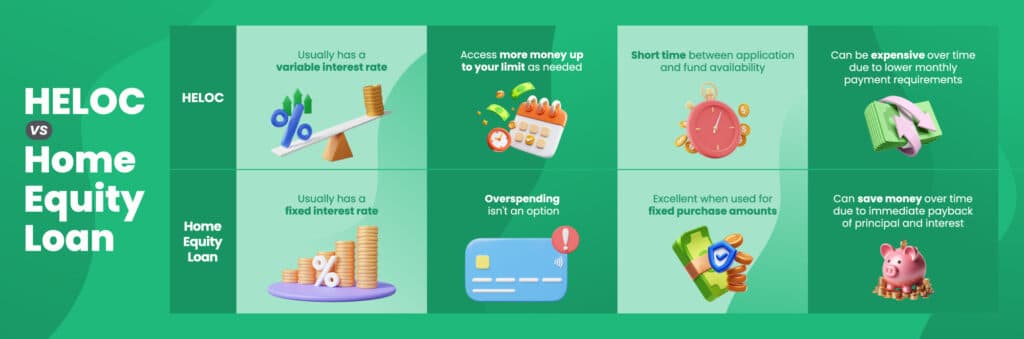
HELOC Vs Home Equity Loan
Whether you choose a HELOC or a home equity loan depends primarily on how you'll use the funds. If you have expenses you wish to cover in the future, but the amount is uncertain, or you feel you may need additional funds, a HELOC may be best.
On the other hand, if you're looking to fund a single project or pay a known amount using the funds, the simplicity, and potentially lower interest costs over time of a home equity loan can be your best bet.
One feature of HELOCs that may sway your decision is that they generally take less time to obtain approval for and receive than home equity loans. The typical time from application to funds availability for a HELOC is between two and six weeks while getting the funds for a home equity loan can take between two weeks and a few months.
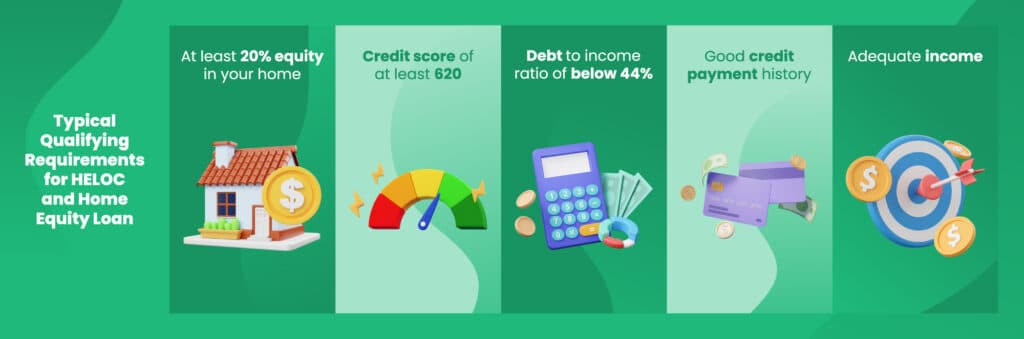
Qualifying for HELOCS and Home Equity Loans
Qualifying for a HELOC or a home equity loan has similar requirements to many lower-interest borrowing options. While many borrowers with fair credit can benefit from relaxed approval requirements associated with personal loans, HELOCs and equity loans generally have more stringent demands.
HELOC Vs Home Equity Loan: Which is Best for You?
Your financial situation and what you'll use the funds for will determine whether a HELOC or home equity loan is best. For borrowers who might feel tempted to overspend, a home equity loan with a fixed amount is likely the best option in most cases. For those looking for spending flexibility, a HELOC is the way to go. The best home equity loan lenders generally offer both
Related Article: Can I Get a Home Equity Loan For a Manufactured Home?
Check out our leading home equity and HELOC lenders:
Frequently Asked Questions
About Author

Deane Biermeier
Deane Biermeier is a certified financial educator through the University of Minnesota and a respected authority in financial research, writing, and editing, renowned for his in-depth analyses and expert advice. With a distinguished career that previously spanned home improvement, real estate, and finance topics, Deane's role at Trusted Company Reviews focuses exclusively on finance. Deane has contributed to leading publications such as Forbes Home, US News and World Report, Newsweek Vault, and others. Since joining TrustedCompanyReviews.com in 2023, he has solidified his reputation as a crucial resource for clear, factual financial guidance.